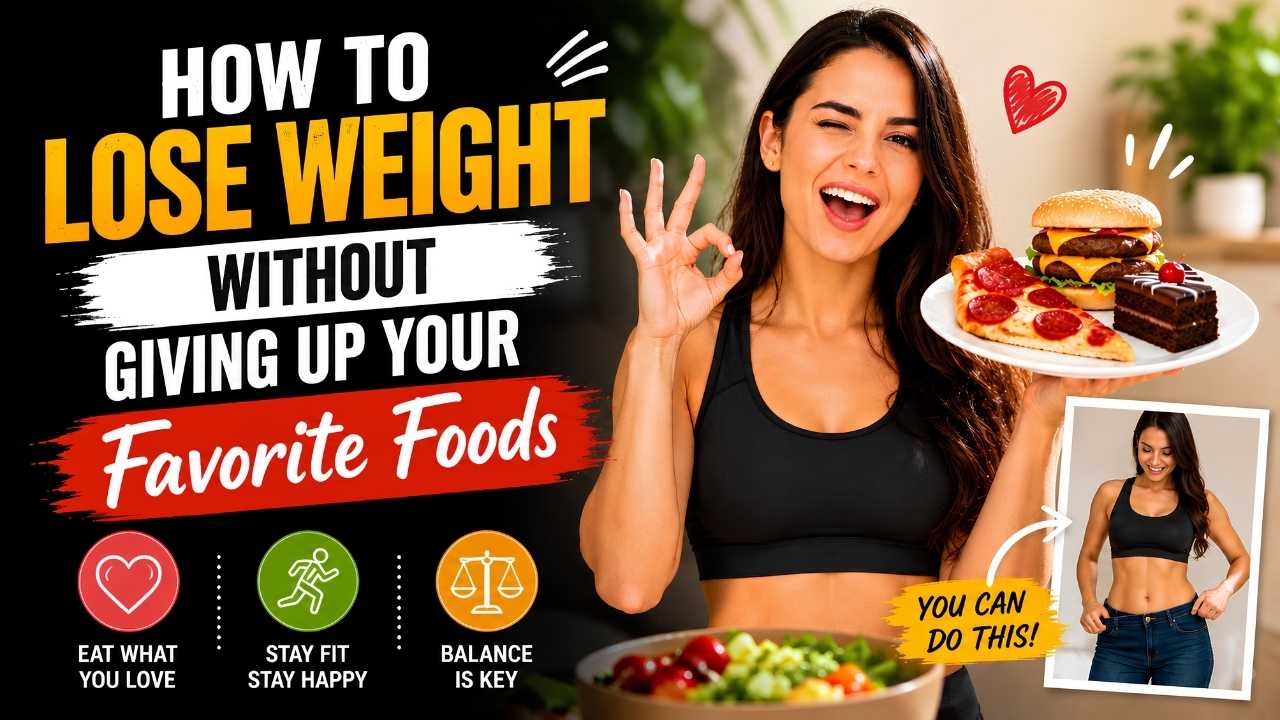
How to Lose Weight Without Giving Up: Losing weight is often associated with strict diets, endless food restrictions, and saying goodbye to the meals you love most. Many people believe that achieving a healthier body requires eliminating pizza, burgers, desserts, chocolates, and other favorite treats forever. However, the reality is far different. Sustainable weight loss is not about deprivation—it is about balance, consistency, and making smarter choices.
In fact, some of the most successful weight-loss journeys are built on flexibility rather than restriction. People who allow themselves to enjoy their favorite foods in moderation are often more likely to stick with healthy habits over the long term. Extreme dieting can lead to frustration, cravings, and eventually giving up altogether. A balanced approach, on the other hand, helps you create a lifestyle that feels enjoyable and realistic.

This guide will show you how to lose weight while still enjoying the foods you love. You will learn practical strategies, healthy eating habits, portion control techniques, and mindset shifts that can help you reach your goals without feeling deprived.
Why Restrictive Diets Often Fail
Many popular diets promise quick results by eliminating entire food groups or imposing strict rules. While these approaches may produce short-term weight loss, they are often difficult to maintain.

When people feel deprived, they tend to:
- Experience stronger cravings
- Think about forbidden foods more frequently
- Feel guilty when they indulge
- Develop unhealthy relationships with food
- Eventually return to old eating habits
Weight loss should not feel like punishment. The goal is to create habits you can maintain for months and years, not just a few weeks.

Understanding the Basics of Weight Loss
Before diving into practical strategies, it is important to understand how weight loss works.
Weight loss occurs when your body burns more calories than it consumes. This is known as a calorie deficit.
The formula is simple:
Calories Burned > Calories Consumed = Weight Loss
However, creating a calorie deficit does not mean starving yourself. It simply means finding a balance between food intake and physical activity.
Factors That Influence Weight Loss
| Factor | Impact on Weight Loss |
|---|---|
| Calorie Intake | Determines overall energy consumption |
| Physical Activity | Increases calorie expenditure |
| Sleep Quality | Affects hunger hormones |
| Stress Levels | Can increase emotional eating |
| Hydration | Supports metabolism and appetite control |
| Muscle Mass | Helps burn more calories at rest |
| Consistency | Critical for long-term success |
The 80/20 Rule: A Sustainable Approach
One of the most effective strategies for losing weight while enjoying your favorite foods is the 80/20 rule.
This approach suggests:
- 80% of your diet comes from nutritious whole foods.
- 20% comes from foods you enjoy purely for pleasure.
For example:
Healthy Choices (80%)
- Fruits
- Vegetables
- Lean proteins
- Whole grains
- Nuts and seeds
- Healthy fats
Fun Foods (20%)
- Pizza
- Ice cream
- Chocolate
- Burgers
- Cookies
- Pasta dishes
This balance helps prevent feelings of restriction while supporting your weight-loss goals.
Practice Portion Control Instead of Elimination
You do not need to stop eating your favorite foods. Instead, learn how to control portions.
Consider these examples:
| Food | Large Portion | Better Portion |
| Pizza | 4-5 slices | 2 slices with salad |
| Ice Cream | Large bowl | Small serving |
| Chocolate | Full bar | 2-3 squares |
| French Fries | Large order | Small order |
| Cake | Thick slice | Moderate slice |
Eating smaller portions allows you to enjoy your favorite foods without consuming excessive calories.
Focus on Protein at Every Meal
Protein is one of the most powerful nutrients for weight loss.
Benefits include:
- Increased fullness
- Reduced cravings
- Better muscle preservation
- Higher calorie burn during digestion
Good protein sources include:
- Chicken breast
- Eggs
- Fish
- Greek yogurt
- Cottage cheese
- Tofu
- Lentils
- Beans
A protein-rich meal can help you feel satisfied for longer, making it easier to resist overeating.
Stop Labeling Foods as Good or Bad
Many people develop an unhealthy relationship with food because they classify foods as either “good” or “bad.”
This mindset often creates guilt and stress.
Instead, think of foods as:
Everyday Foods
These are nutrient-rich foods that support your health and fitness goals.
Examples:
- Fruits
- Vegetables
- Lean proteins
- Whole grains
Sometimes Foods
These are enjoyable treats that can still fit into a healthy lifestyle.
Examples:
- Doughnuts
- Chips
- Ice cream
- Fast food
No food should carry guilt when consumed mindfully.
Eat Mindfully
Mindful eating can dramatically reduce overeating.
Tips include:
- Eat slowly
- Chew thoroughly
- Avoid distractions
- Focus on flavors and textures
- Stop eating when comfortably full
Many people consume hundreds of extra calories simply because they eat too quickly or while distracted by screens.
Plan Your Treats
One common mistake is trying to avoid favorite foods completely.
A smarter strategy is scheduling them intentionally.
Examples:
- Pizza night every Friday
- Ice cream on weekends
- Favorite dessert at family gatherings
When treats are planned, they become part of your lifestyle rather than a source of guilt.
Increase Daily Physical Activity
Exercise provides flexibility in your diet while improving overall health.
Popular options include:
Walking
Walking is simple, effective, and accessible.
Benefits:
- Burns calories
- Improves heart health
- Reduces stress
- Supports fat loss
Strength Training
Strength training helps preserve and build muscle.
Examples:
- Squats
- Push-ups
- Deadlifts
- Lunges
More muscle means your body burns more calories throughout the day.
Cardio Workouts
Activities include:
- Running
- Cycling
- Swimming
- Dancing
- Hiking
Choose activities you genuinely enjoy.
Avoid Drinking Your Calories
Many beverages contain large amounts of hidden calories.
Examples include:
| Beverage | Approximate Calories |
| Soda (500 ml) | 200+ |
| Sweetened Coffee | 250+ |
| Energy Drink | 150-300 |
| Milkshake | 400-800 |
| Water | 0 |
Switching to water can significantly reduce daily calorie intake.
Manage Emotional Eating
Many people eat due to emotions rather than hunger.
Common triggers include:
- Stress
- Boredom
- Loneliness
- Anxiety
- Frustration
Before eating, ask yourself:
“Am I physically hungry, or am I trying to cope with an emotion?”
Finding alternative coping mechanisms can make a huge difference.
Healthy alternatives include:
- Walking
- Journaling
- Meditation
- Reading
- Calling a friend
Prioritize Sleep
Sleep plays a major role in weight management.
Lack of sleep can:
- Increase hunger hormones
- Reduce fullness signals
- Trigger cravings
- Lower energy levels
Aim for:
7–9 hours of quality sleep each night.
People who consistently sleep well often find it easier to manage their weight.
Stay Hydrated
Sometimes thirst is mistaken for hunger.
Benefits of proper hydration include:
- Better digestion
- Improved energy
- Reduced overeating
- Enhanced workout performance
General recommendations:
- Men: Around 3.7 liters daily
- Women: Around 2.7 liters daily
Water requirements vary based on activity level and climate.
Keep Healthy Foods Accessible
Environment influences behavior.
Make healthy choices easier by:
- Keeping fruit visible
- Preparing healthy snacks
- Storing vegetables at eye level
- Limiting highly processed snack stockpiles
Convenience often determines food choices.
Track Progress Beyond the Scale
The scale does not tell the whole story.
Measure progress through:
- Waist measurements
- Clothing fit
- Energy levels
- Strength improvements
- Sleep quality
- Confidence
Weight loss is just one aspect of overall health improvement.
Common Weight-Loss Mistakes to Avoid
Skipping Meals
Skipping meals can increase hunger and lead to overeating later.
Following Crash Diets
Rapid weight-loss methods are often unsustainable.
Cutting Out Entire Food Groups
Extreme restrictions increase cravings and reduce adherence.
Ignoring Strength Training
Muscle maintenance is essential during weight loss.
Expecting Perfection
Consistency matters more than perfection.
A single meal will not ruin your progress.
Sample Day of Eating While Enjoying Favorite Foods
| Meal | Example |
| Breakfast | Greek yogurt, berries, and oats |
| Snack | Apple and almonds |
| Lunch | Grilled chicken, rice, vegetables |
| Snack | Protein shake |
| Dinner | Two slices of pizza with salad |
| Dessert | Small serving of ice cream |
This approach allows enjoyment while maintaining balance.
Building a Healthy Relationship with Food
Weight loss becomes easier when food is viewed as both nourishment and enjoyment.
Healthy relationships with food involve:
- Flexibility
- Moderation
- Self-awareness
- Consistency
- Enjoyment
The goal is not perfection. The goal is creating habits that support your health while allowing you to enjoy life.
Key Highlights
- You do not need to eliminate favorite foods to lose weight.
- Weight loss depends on maintaining a calorie deficit.
- The 80/20 rule promotes balance and sustainability.
- Portion control is more effective than complete restriction.
- Protein helps reduce hunger and supports muscle maintenance.
- Mindful eating can prevent overeating.
- Regular exercise increases calorie expenditure and overall health.
- Proper sleep and hydration support weight-loss efforts.
- Emotional eating should be addressed with healthy coping strategies.
- Long-term consistency matters more than short-term perfection.
Final Words
Losing weight without giving up your favorite foods is not only possible—it is often the most sustainable approach. Restrictive diets may promise rapid results, but they frequently lead to frustration and burnout. A balanced lifestyle that includes nutritious meals, regular exercise, mindful eating, and occasional treats can help you achieve lasting success.
Remember that healthy living is not about perfection. It is about making better choices most of the time while still allowing room for enjoyment. By focusing on moderation rather than elimination, you can build habits that support your goals without sacrificing the foods you love.
The best weight-loss plan is one you can maintain for life. Enjoy your favorite foods, stay active, be patient with yourself, and trust the process.
FAQs
Can I eat pizza and still lose weight?
Yes. Weight loss depends on your overall calorie balance. Eating pizza occasionally and in controlled portions can fit into a healthy weight-loss plan.
Is it necessary to stop eating sugar completely?
No. Most people can enjoy sugar in moderation while maintaining a healthy diet and achieving weight-loss goals.
How often can I eat my favorite treats?
There is no universal rule. Many people successfully include treats several times per week while maintaining a balanced diet.
What is the best exercise for weight loss?
The best exercise is one you enjoy and can perform consistently. Walking, strength training, cycling, swimming, and running are all effective options.
Why do I crave unhealthy foods during a diet?
Cravings often increase when foods are excessively restricted. Allowing occasional treats can reduce feelings of deprivation.
Can I lose weight without going to the gym?
Yes. Weight loss can be achieved through a calorie deficit, daily movement, home workouts, walking, and healthy eating habits.
How long does healthy weight loss take?
A sustainable rate of weight loss is typically around 0.5 to 1 kilogram per week, depending on individual circumstances.
Is counting calories necessary?
Not always. Some people benefit from calorie tracking, while others achieve success through portion control and mindful eating.
What should I do after overeating?
Avoid guilt and return to your normal healthy routine. One indulgent meal does not ruin long-term progress.
Can I maintain weight loss permanently?
Yes. Sustainable habits, balanced eating, regular physical activity, and realistic expectations are key to long-term weight maintenance.