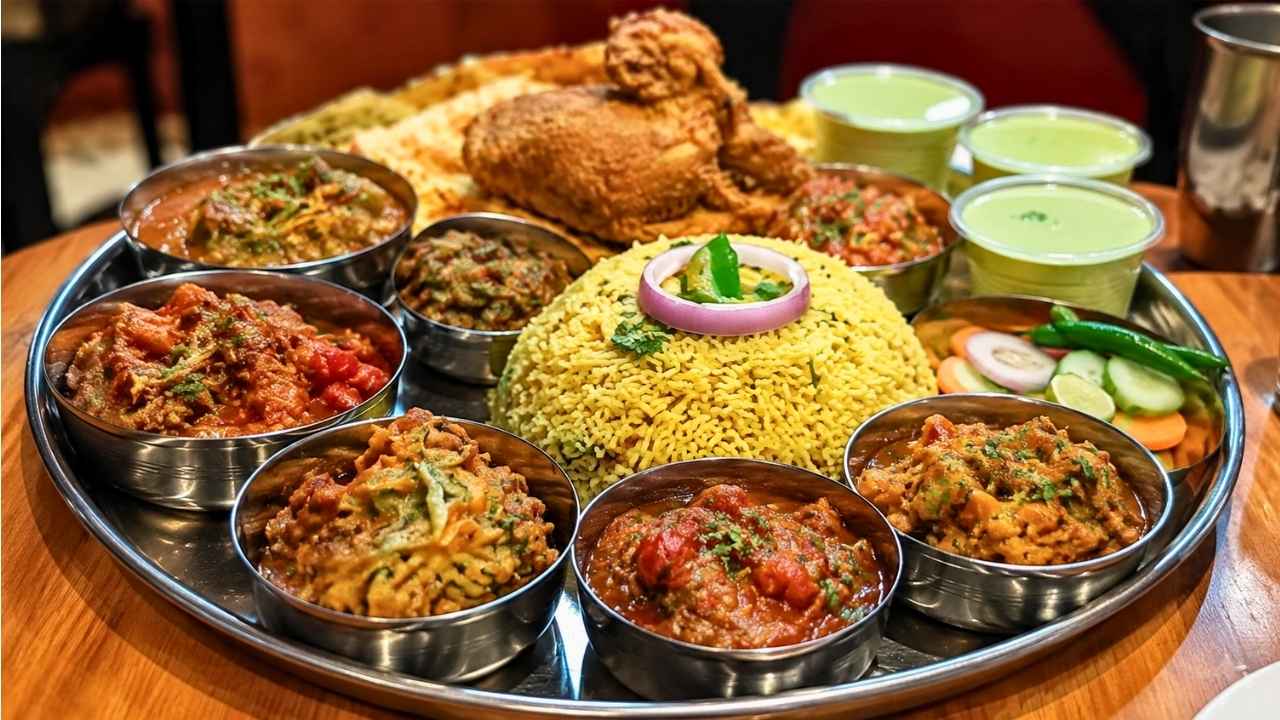
Traditional Indian Thali Feast on a Wooden Table The culinary landscape of India is a magnificent tapestry woven with spices, traditions, and centuries of cultural evolution. At the absolute pinnacle of this gastronomic heritage sits the traditional Indian thali. More than just a meal, a thali is a philosophical approach to dining, an artistic presentation, and a masterclass in nutritional balance. When arranged thoughtfully on a rustic wooden table, a homemade thali transforms a simple afternoon or evening into a celebratory feast. It invites diners to slow down, connect with their food, and experience a symphony of flavors that dance harmoniously across the palate.
To truly understand the essence of an authentic Indian food platter, one must look past the individual bowls and see the collective genius behind its design. Every single element, from the fiery curries to the cooling condiments and the structural grains, has a specific purpose. It is a complete universe on a single plate, reflecting the diverse agricultural wealth and deep culinary wisdom of the Indian subcontinent.

The Cultural Significance and Philosophy of the Thali
The word thali literally translates to a large plate or platter in Hindi. Historically, the concept of serving food in this format is deeply rooted in ancient Indian traditions, including the principles of Ayurveda. According to Ayurvedic texts, a truly satisfying and wholesome meal must incorporate six distinct tastes, known as Shad Rasa. These include sweet, sour, salty, bitter, pungent, and astringent.
A traditional thali is deliberately designed to touch upon each of these flavor profiles. The sweet component provides energy and comfort, the sour aids digestion, the salty maintains fluid balance, the bitter purifies the body, the pungent stimulates the appetite, and the astringent helps in assimilation. By balancing these six tastes, a homemade thali ensures that the body receives comprehensive nutrition while preventing cravings after the meal.

Beyond health, the thali represents hospitality and community. In Indian culture, serving food is considered an act of love and spiritual devotion. When a host presents a guest with a beautifully laden platter on a wooden table, it signifies respect and a desire to provide the ultimate comfort. The wooden table itself grounds the experience, adding an earthy, rustic charm that recalls ancient communal dining practices where people sat together on the floor around low wooden platforms called chowkis.
Anatomy of an Authentic Homemade Indian Platter
An authentic homemade thali is a carefully curated assembly line of textures, temperatures, and aromatic compounds. While the specific dishes vary dramatically as you travel from one Indian state to another, the structural skeleton of the platter remains remarkably consistent.

At the center of the experience are the primary starches, which act as the canvas for the entire meal. Fragrant steamed rice, often flavored with cumin seeds or whole spices, occupies a prominent place alongside freshly prepared flatbreads. Surrounding these central elements are small, individual metal or clay bowls called katoris. These bowls contain an assortment of liquid, semi-dry, and dry preparations.
The liquid elements typically include a comforting lentil soup known as dal, which provides essential plant-based proteins, and a rich, spice-infused gravy or curry. Beside them sit dry vegetable stir-fries, which showcase seasonal produce and add structural crunch to the plate. To tie everything together, the perimeter of the thali is reserved for essential side dishes, crunchy papadums, tangy pickles, fresh salads, and a soothing dairy element like yogurt or seasoned buttermilk.

The Heart of the Feast Flavorful Curries and Gravies
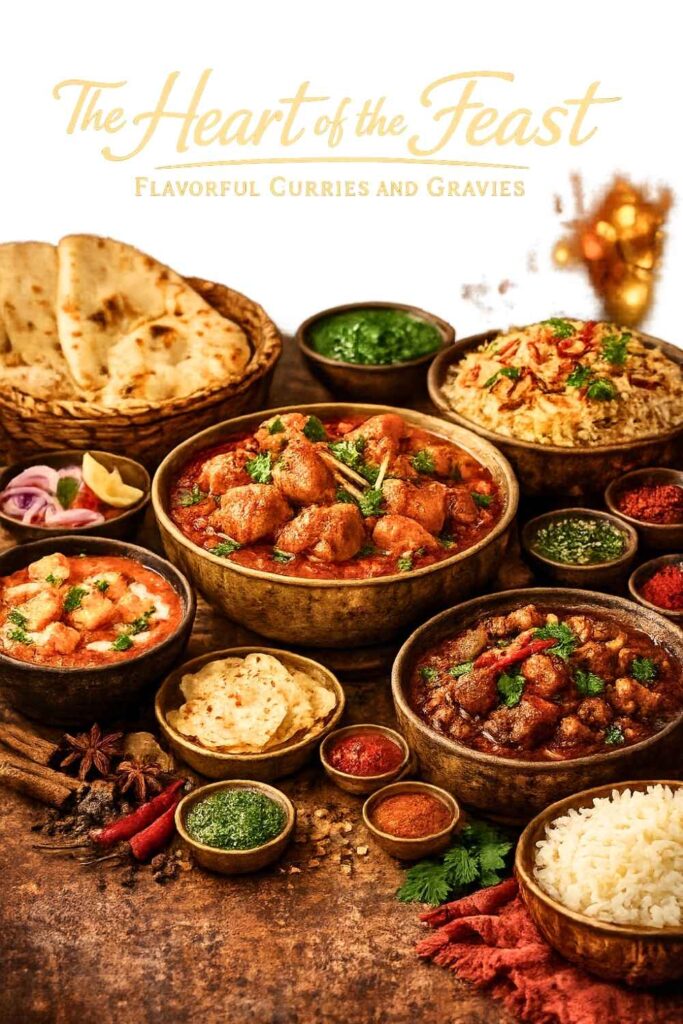
No traditional Indian thali is complete without its crowning glory: the curries. These complex gravies form the emotional core of the homemade platter, offering deep, slow-cooked flavors that require patience and precision to develop. The magic of an authentic Indian curry lies not in its heat, but in the intricate layering of aromatics and ground spices.
In a typical homemade feast, you will often find two distinct styles of curry to provide contrast. The first is usually a robust, legume-based preparation like rajma, which consists of slow-cooked kidney beans in a thick tomato-onion gravy, or chole, a spicy chickpea stew infused with tea leaves, amchoor dry mango powder, and a special blend of roasted spices. These dishes are hearty, deeply satisfying, and offer a dense texture that pairs beautifully with both rice and flatbreads.

The second style of curry often highlights seasonal vegetables or fresh cottage cheese, known as paneer. A classic example is shahi paneer or palak paneer, where cubes of fresh cheese are simmered in a vibrant green spinach puree tempered with garlic and green chilies. The gravies are meticulously built by caramelizing finely chopped onions, cooking down fresh tomato paste until the oils separate, and introducing a balanced spice mix containing turmeric, coriander powder, cumin powder, and garam masala. The result is a sauce that is velvety, aromatic, and deeply satisfying.
Grains and Starches The Foundation of Rice and Bread
The starches on an Indian food platter are much more than mere fillers; they are the essential vehicles used to scoop up the curries and absorb the rich flavors of the dals. A premium homemade thali almost always features a dual combination of rice and freshly made flatbreads, offering a delightful interplay of textures.

The rice served in a traditional feast is rarely plain. Chefs and home cooks prefer to elevate it by using long-grain basmati rice, celebrated globally for its floral aroma and fluffy texture. The rice is often transformed into jeera rice by tempering it in hot clarified butter, known as ghee, along with a generous spoonful of cumin seeds and whole fragrant spices like cardamom, cloves, and bay leaves. Each grain remains distinct, providing a light, airy base that soaks up liquid gravies perfectly.
Running parallel to the rice are the artisanal flatbreads, made fresh and served straight from the skillet to the wooden table. The most common household staple is the roti or phulka, an unleavened whole wheat flatbread that puffs up into a beautiful sphere over an open flame. For festive occasions, the menu might expand to include flaky, layered parathas brushed with homemade butter, or deep-fried, golden-brown puris that offer a crisp exterior and a soft, steamy interior. The chewiness of the bread contrasts elegantly with the soft fluffiness of the basmati rice, ensuring that every bite feels dynamic.

Essential Accompaniments The Role of Dals and Lentils
If curries represent the celebration within a thali, then dal represents the comforting soul. Lentils are a fundamental daily necessity in Indian households, serving as the primary source of protein for a large vegetarian population. On a festive homemade platter, the dal is elevated to showcase the cook’s mastery over tempering, a culinary technique known as tadka or chhonk.
A celebratory thali often features dal tadka or the luxurious dal makhani. Dal tadka is typically made using split yellow lentils cooked to a creamy consistency with turmeric and salt. The defining moment occurs just before serving, when hot ghee is infused with dried red chilies, minced garlic, smoky cumin seeds, and a pinch of asafoetida. This sizzling mixture is poured directly over the cooked lentils, releasing an intoxicating aroma that permeates the entire dining space.

Dal makhani, on the other hand, relies on slow, meditative cooking. Whole black lentils and red kidney beans are simmered on a low flame for hours, often overnight, with pureed tomatoes, butter, and cream. The slow cooking breaks down the starch in the lentils, creating a naturally velvety, thick texture without the need for artificial thickeners. This comforting, earthy component provides a grounding element that balances the brighter, sharper flavors found elsewhere on the plate.
The Crisp and the Crunch Dry Vegetable Side Dishes
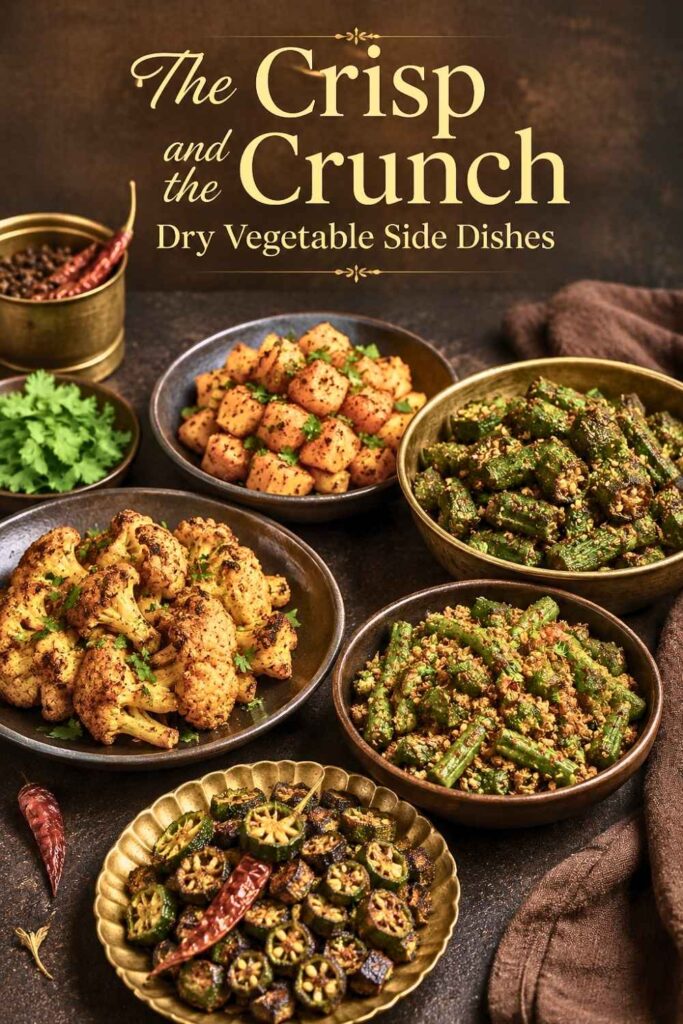
To prevent the thali from becoming overly heavy or liquid-dominant, dry vegetable preparations, known as sabzis, are introduced. These side dishes celebrate the natural sweetness, bitterness, and texture of seasonal vegetables, cooking them quickly with minimal water to retain their structural integrity.

A popular inclusion on a homemade platter is aloo gobi, a dry stir-fry of tender potato wedges and cauliflower florets tossed with ginger, green chilies, and a touch of amchoor for a subtle tang. Another brilliant addition is bhindi masala, where okra is expertly sliced and sauteed with onions and dry spices at a high temperature to eliminate any sliminess, leaving behind a crisp, deeply flavorful green vegetable.
These dry side dishes provide a necessary structural break during the meal. They offer a clean crunch and a focused flavor profile that contrasts with the multi-ingredient complexity of the main curries. Eating a piece of spiced, roasted cauliflower between spoonfuls of rich gravy cleanses the palate and keeps the dining experience engaging from start to finish.

Cooling Elements and Condiments Balancing the Heat
Spices are foundational to Indian cuisine, but an authentic thali never leaves the diner overwhelmed by heat. To create a comfortable, balanced experience, a dedicated section of the platter is always reserved for cooling elements and sharp condiments that regulate the temperature and aid digestion.
The primary cooling agent is raita, a yogurt-based side dish that can be customized in endless ways. Home cooks often whisk fresh, homemade yogurt until smooth and fold in finely chopped cucumbers, tomatoes, and red onions, or tiny crispy globes of fried chickpea flour called boondi. Seasoned with roasted cumin powder, black salt, and fresh mint leaves, raita provides an instant soothing effect that coats the palate, taming the fire of the spicier curries.
Sitting right alongside the raita are the sharp condiments: pickles and chutneys. A spoonful of spicy, tangy green chutney made from fresh coriander, mint, green chilies, and lemon juice adds a burst of herbal freshness to the meal. In contrast, a small piece of preserved mango or lime pickle provides an intense hit of salt, oil, and sourness. These condiments are used sparingly, acting like punctuation marks that emphasize and elevate the main components of the feast.
Visual Appeal The Aesthetics of the Wooden Table Setting
We eat with our eyes long before the food touches our lips, and the presentation of a traditional Indian thali on a wooden table is a visual masterpiece. The natural grain, warmth, and texture of a dark or honey-toned wooden table provide the perfect organic backdrop for the polished metal of the platter.
Traditionally, thalis are made of brass, bronze, copper, or stainless steel. The reflective quality of the large circular tray, ringed with small matching katoris, creates a striking contrast against the matte, earthy surface of the wood. The visual arrangement is highly intentional, resembling a colorful mandala. The deep reds of a tomato-based curry, the vibrant green of spinach or mint chutney, the pristine white of the rice, and the golden-brown hues of the flatbreads create an immediate sensory impact.
This setup is not merely decorative; it creates an atmosphere of mindfulness. The physical beauty of the arrangement commands attention, encouraging diners to appreciate the effort involved in preparing the meal. The wooden table grounds the entire experience, transforming a modern dining room into a timeless space where food is revered as a source of life, joy, and connection.
Comparative Overview of North Indian vs. South Indian Thalis
While the core philosophy remains uniform, the execution of a thali varies significantly between the northern and southern regions of India, shaped by local geography, climate, and agriculture.
| Feature | North Indian Thali | South Indian Thali |
| Primary Grain | Wheat flatbreads like rotis, naans, and parathas take center stage. | Rice is the undisputed king, served in multiple courses. |
| Core Lentil Prep | Thick, creamy dals like dal makhani or dal tadka. | Tangy, watery preparations like sambar and peppery rasam. |
| Fat Medium | Clarified butter, ghee, and mustard oil are preferred. | Coconut oil and sesame oil dominate the tempering process. |
| Sourness Source | Dried mango powder, amchoor, tomatoes, and fresh lemons. | Tamarind paste and kokum provide the signature tang. |
| Vegetable Style | Rich, gravy-based vegetable dishes with cashew or poppy seed pastes. | Dry vegetable stir-fries with grated coconut, known as poriyals. |
| Dessert Type | Milk-heavy sweets like gulab jamun, kheer, or rasgulla. | Grain and lentil-based puddings sweetened with jaggery, called payasam. |
The Sweet Conclusion Traditional Desserts
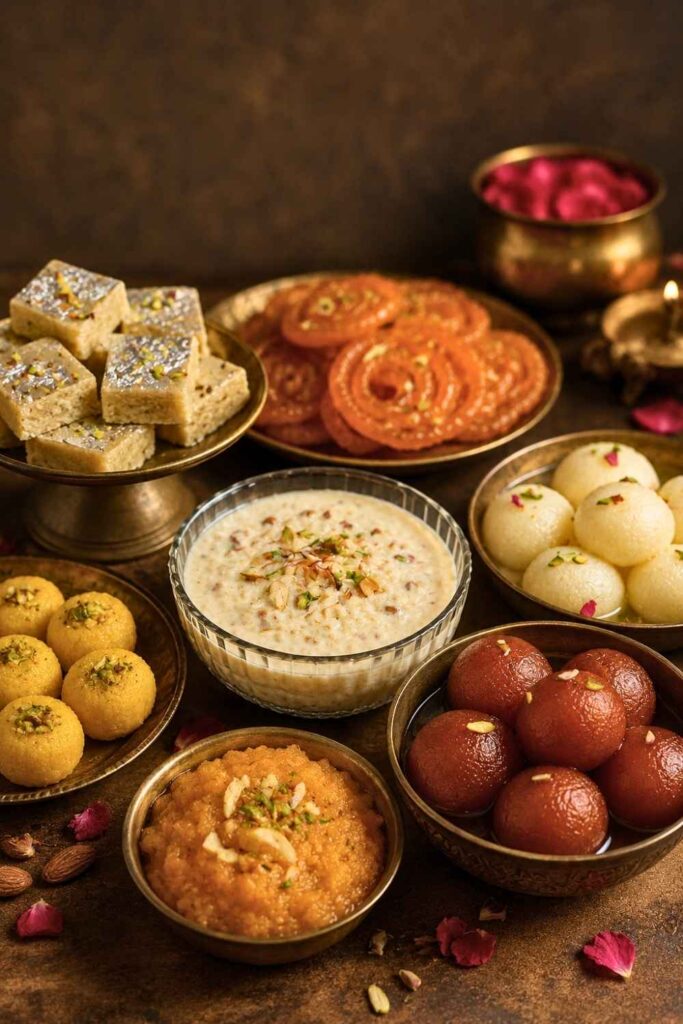
A traditional Indian feast refuses to let the diner depart without a sweet blessing. The dessert on a thali is not an afterthought; it is an integral component that concludes the nutritional cycle, satisfying the sweet requirement of the Shad Rasa and signaling completeness to the brain.
In a homemade feast, the dessert is often a labor of love. It might be a warm bowl of kheer, a slow-cooked rice pudding made by reducing milk to half its volume, sweetening it with unrefined sugar or jaggery, and perfuming it with green cardamom and saffron strands. The slow reduction gives the milk a characteristic nutty flavor and a creamy texture that coats the spoon.
Alternatively, the platter might feature gulab jamuns, soft berry-sized balls of milk solids kneaded with a touch of flour, fried to a deep golden brown, and soaked in a warm, rose-water infused sugar syrup. The contrast between a hot, syrupy sweet and the remnants of a savory, spicy meal creates a spectacular finale on the palate, leaving a lingering sense of warmth and deep satisfaction.
Key Highlights
The traditional thali is a brilliant manifestation of ancient nutritional science, balancing macro and micronutrients through historical culinary wisdom.
The visual contrast between a polished metal platter and a rustic wooden table creates an engaging, sensory-rich dining environment.
Flatbreads provide structural variety, while long-grain basmati rice acts as a light canvas for complex gravies.
Cooling elements like raita and mint chutney are essential structural additions designed to temper spice and aid human digestion.
Regional variations across India ensure that every thali tells a unique story of local agriculture, geography, and heritage.
Frequently Asked Questions
What is the correct order to eat the items in a traditional Indian thali?
While there is no rigid rule, tradition suggests starting with the lighter items. Diners usually begin with the flatbreads, using them to eat the dry vegetable dishes and thicker curries. Once the breads are finished, they move on to the rice, mixing it with the comforting dal, sambar, or liquid gravies. The raita and chutneys are consumed throughout the meal to balance flavors, and the dessert is reserved exclusively for the end.
Why are Indian thalis traditionally served on metal platters?
Metal platters, particularly those made of brass, bronze, or copper, were chosen because of their durability and ability to conduct and retain heat, keeping the various components of the meal warm. Additionally, in ancient Indian culture, metal surfaces were considered easier to purify and sanitize thoroughly compared to porous materials, aligning with strict traditional standards of kitchen hygiene.
Can a traditional Indian thali be made completely vegan?
Yes, a traditional thali can easily be adapted into a completely vegan feast. The primary adjustments involve replacing clarified butter with plant-based oils like coconut, mustard, or sunflower oil for tempering. Additionally, dairy-based curries can utilize coconut milk or cashew paste for richness, and standard yogurt in raita can be substituted with peanut or almond milk yogurt.
Is a thali considered a healthy meal option for daily consumption?
When prepared at home with moderate oil and spices, a thali is one of the healthiest, most nutritionally balanced meals available. It naturally provides a proper distribution of carbohydrates from grains, protein from lentils, vitamins and minerals from seasonal vegetables, and healthy fats from minimal tempering, creating a complete dietary ecosystem.
What makes homemade thali food taste different from restaurant Indian food?
Homemade thalis rely on fresh, minimally processed ingredients and light spice blends tailored for daily health. Restaurants often use heavy base gravies containing large amounts of cream, commercial butter, and cashew paste to create uniform richness, which can mask the distinct, delicate flavors of individual vegetables and lentils.
Final Words
The traditional Indian thali feast, displayed proudly on a warm wooden table, is far more than a collection of delicious recipes; it is a holistic celebration of life, nature, and human connection. It stands as a beautiful reminder that a meal is at its best when it respects balance, honors seasonal ingredients, and satisfies all the senses simultaneously. By bringing together curries, starches, crispy accompaniments, and cooling elements, this ancient dining format offers a timeless blueprint for wholesome eating. Gathering around a homemade platter invites us to slow down, cherish the rich heritage of authentic flavors, and transform ordinary sustenance into an unforgettable, joyful feast.