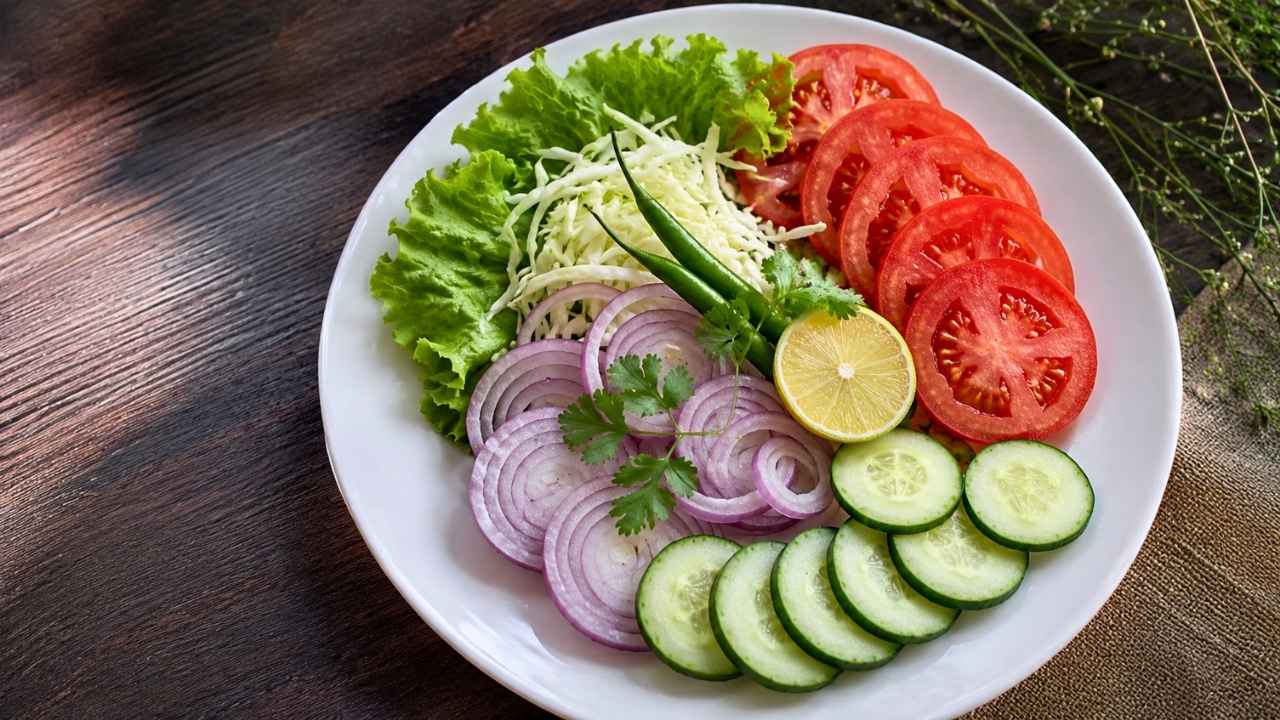
Fresh Veggie Salad on a Wooden Table: Fresh vegetables have always been the foundation of a healthy lifestyle. Whether served as a light lunch, a colorful side dish, or the centerpiece of a nutritious dinner, a fresh veggie salad offers the perfect balance of taste, nutrition, and visual appeal. When beautifully arranged on a rustic wooden table, the vibrant colors of garden vegetables create a welcoming atmosphere that celebrates nature’s freshness.
A healthy garden vegetable salad is more than just a combination of vegetables. It represents freshness, simplicity, and mindful eating. Every ingredient contributes its own texture, flavor, and nutritional value, making each bite both satisfying and beneficial for overall well-being.

This guide explores everything you need to know about creating the perfect fresh veggie salad, from selecting the best ingredients to preparing delicious dressings and presenting your salad with rustic charm.
Why Fresh Veggie Salads Are So Popular
Fresh salads have become increasingly popular because they combine excellent nutrition with incredible versatility. They can be customized according to personal preferences, seasonal availability, and dietary needs.
People appreciate fresh salads because they are:
- Rich in vitamins and minerals
- Naturally low in calories
- Easy to prepare
- Suitable for almost every meal
- Colorful and visually appealing
- Perfect for healthy lifestyles
- Refreshing during warm weather
The beauty of a fresh veggie salad lies in its simplicity. Even the most basic ingredients can create a delicious meal when combined thoughtfully.
Benefits of Eating Fresh Garden Vegetables
Fresh vegetables provide numerous health benefits because they contain essential nutrients that support the body’s daily functions.
Some of the major benefits include:

| Nutrient | Common Vegetable Sources | Health Benefits |
|---|---|---|
| Vitamin A | Carrots, spinach | Supports healthy vision |
| Vitamin C | Bell peppers, tomatoes | Strengthens immunity |
| Vitamin K | Lettuce, kale | Supports bone health |
| Fiber | Cucumbers, cabbage | Improves digestion |
| Potassium | Tomatoes, cucumbers | Maintains healthy blood pressure |
| Antioxidants | Colorful vegetables | Protect cells from damage |
Including a variety of vegetables ensures a wide range of nutrients that contribute to overall health.
Essential Ingredients for a Healthy Garden Vegetable Salad
The best salads begin with fresh, high-quality ingredients. Choosing seasonal vegetables often results in better flavor and texture.

Common salad ingredients include:
- Romaine lettuce
- Green leaf lettuce
- Spinach
- Cherry tomatoes
- Cucumbers
- Bell peppers
- Carrots
- Red onions
- Radishes
- Sweet corn
- Purple cabbage
- Avocado
- Fresh herbs like parsley and cilantro
Each ingredient adds its own unique color, crunch, and nutritional value.

Choosing Fresh Ingredients
Freshness directly affects both taste and nutrition. When shopping for vegetables, look for vibrant colors and crisp textures.
Here are a few simple tips:

- Select leafy greens without brown spots.
- Choose firm cucumbers.
- Pick tomatoes that feel slightly soft but not mushy.
- Buy carrots with smooth skin.
- Select peppers with glossy surfaces.
- Avoid vegetables with bruises or signs of decay.
Fresh vegetables require minimal seasoning because their natural flavors are already enjoyable.
Preparing Vegetables Properly
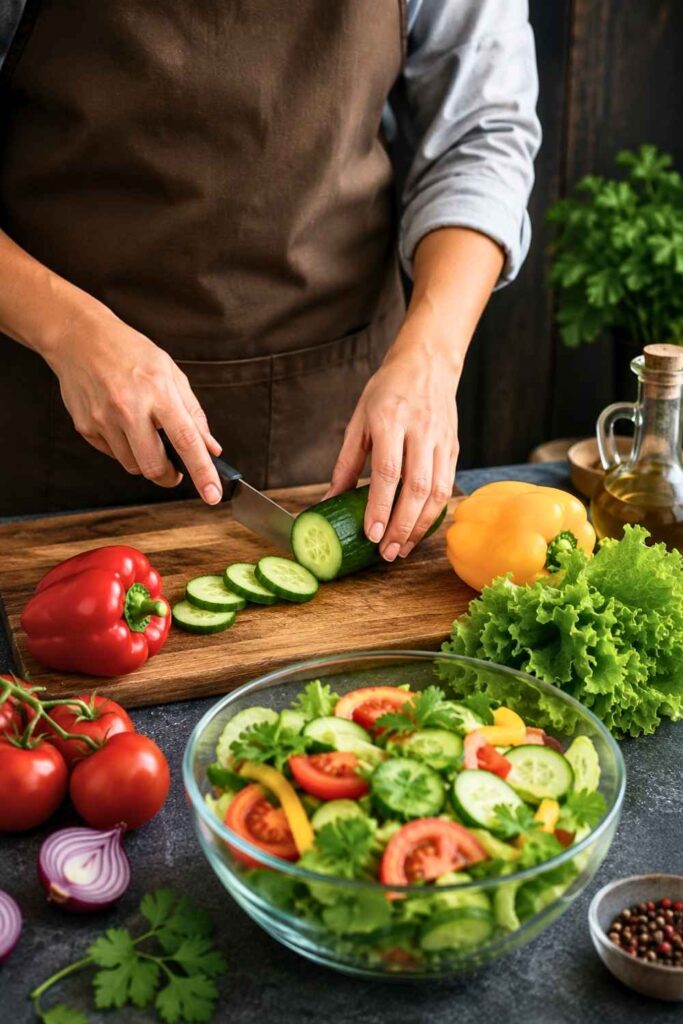
Proper preparation enhances both food safety and taste.

Begin by washing every vegetable thoroughly under clean running water. Dry leafy greens using a salad spinner or clean kitchen towel.
Preparation tips include:

- Slice vegetables evenly.
- Remove damaged leaves.
- Peel carrots if desired.
- Cut tomatoes just before serving.
- Keep ingredients chilled until ready to assemble.
Consistent cutting also improves the salad’s appearance.
The Importance of Color in a Fresh Salad
A colorful salad is usually a nutritious salad. Different vegetable colors often represent different vitamins and antioxidants.
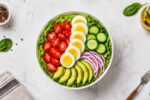
| Vegetable Color | Examples | Major Nutrients |
|---|---|---|
| Green | Lettuce, spinach | Iron, Vitamin K |
| Red | Tomatoes, peppers | Lycopene, Vitamin C |
| Orange | Carrots | Beta-carotene |
| Yellow | Corn | Lutein |
| Purple | Cabbage, onions | Anthocyanins |
| White | Radishes | Minerals and fiber |
Combining multiple colors creates a visually attractive and nutrient-rich meal.
Rustic Presentation on a Wooden Table
Presentation enhances the overall dining experience.
A rustic wooden table creates a natural background that complements the freshness of vegetables.
Presentation ideas include:
- Use wooden salad bowls.
- Garnish with fresh herbs.
- Add lemon slices.
- Sprinkle seeds on top.
- Serve with wooden serving spoons.
- Use linen napkins for a farmhouse appearance.
This style creates a warm, inviting atmosphere suitable for family meals and food photography.
Best Homemade Salad Dressings
A delicious dressing brings all the ingredients together without overpowering their natural flavors.
Popular homemade dressings include:
| Dressing | Main Ingredients | Flavor Profile |
|---|---|---|
| Lemon Olive Oil | Lemon juice, olive oil | Fresh and light |
| Honey Mustard | Honey, mustard | Sweet and tangy |
| Balsamic Vinaigrette | Balsamic vinegar, olive oil | Rich and balanced |
| Yogurt Herb | Greek yogurt, herbs | Creamy and refreshing |
| Garlic Lemon | Garlic, lemon, olive oil | Bold and zesty |
Homemade dressings typically contain fewer preservatives than many store-bought alternatives.
Adding Protein to Your Salad
Adding protein transforms a simple salad into a complete meal.
Excellent protein choices include:
- Grilled chicken
- Boiled eggs
- Chickpeas
- Black beans
- Tofu
- Paneer
- Cottage cheese
- Quinoa
These ingredients provide lasting energy and improve satiety.
Healthy Toppings That Add Texture
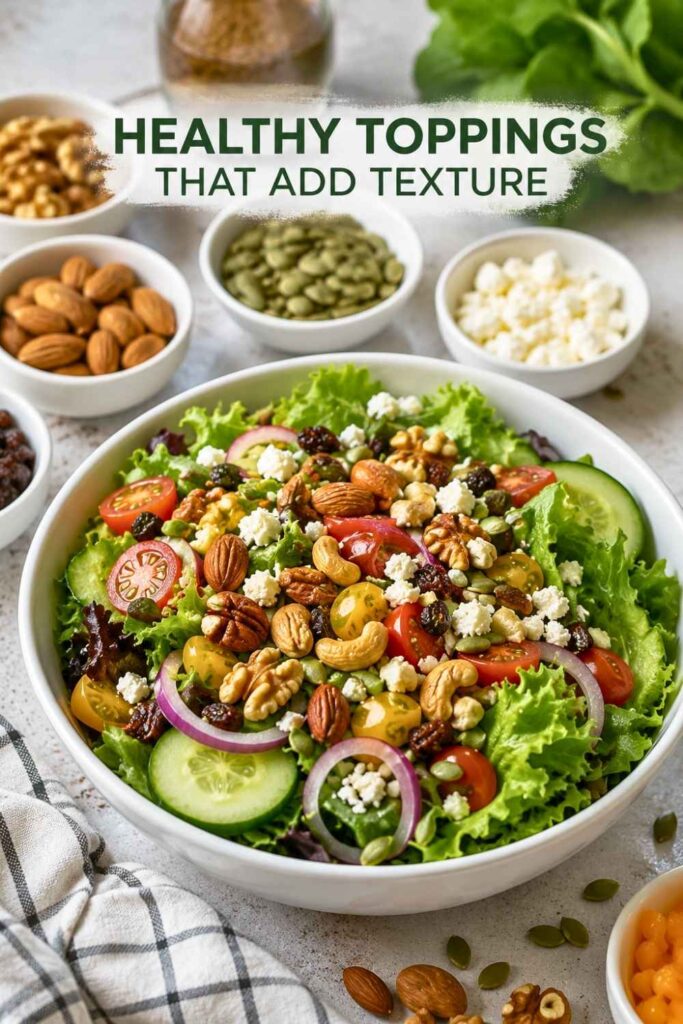
Texture makes salads more enjoyable.
Popular healthy toppings include:
- Pumpkin seeds
- Sunflower seeds
- Walnuts
- Almonds
- Chia seeds
- Flaxseeds
- Croutons
- Roasted chickpeas
A combination of crunchy and soft ingredients creates a satisfying eating experience.
Seasonal Vegetables Make Better Salads
Using seasonal produce improves freshness, flavor, and nutritional quality.
| Season | Recommended Vegetables |
|---|---|
| Spring | Lettuce, spinach, radishes |
| Summer | Tomatoes, cucumbers, peppers |
| Autumn | Carrots, cabbage, beets |
| Winter | Kale, broccoli, cauliflower |
Seasonal vegetables are often more affordable and environmentally friendly.
Tips for Making Restaurant-Quality Salads
Professional-looking salads follow a few simple principles.
- Use fresh ingredients.
- Mix different colors.
- Balance crunchy and soft textures.
- Avoid overdressing.
- Chill ingredients before serving.
- Garnish just before eating.
- Toss gently.
These small details create a polished and appetizing final dish.
Common Mistakes to Avoid
Even healthy salads can become less enjoyable if prepared incorrectly.
Avoid these common mistakes:
- Using wilted vegetables
- Adding too much dressing
- Overmixing delicate greens
- Forgetting seasoning
- Cutting vegetables too far in advance
- Ignoring texture balance
- Using poor-quality olive oil
Attention to detail makes a noticeable difference.
Storage Tips for Fresh Salads
Proper storage helps maintain freshness.
| Storage Tip | Benefit |
|---|---|
| Store greens separately | Prevents wilting |
| Keep dressing separate | Maintains crispness |
| Refrigerate immediately | Preserves freshness |
| Use airtight containers | Extends shelf life |
| Add avocado before serving | Prevents browning |
Prepared vegetables generally remain fresh for two to three days when refrigerated correctly.
Fresh Veggie Salad for Different Occasions
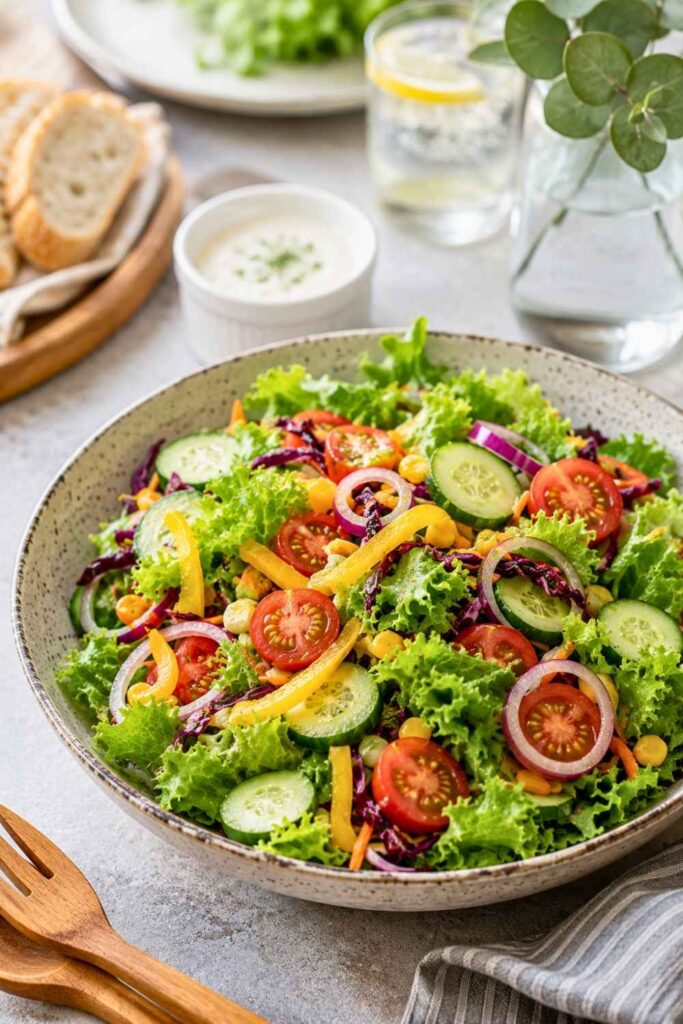
A healthy salad fits almost every occasion.
It works well for:
- Family dinners
- Summer picnics
- Office lunches
- Barbecues
- Holiday meals
- Potluck gatherings
- Healthy meal prep
Its versatility makes it one of the easiest dishes to adapt.
Key Highlights
- Fresh vegetables provide essential vitamins and minerals.
- Colorful salads offer greater nutritional diversity.
- Seasonal produce improves flavor and freshness.
- Homemade dressings create healthier meals.
- Protein additions transform salads into complete meals.
- Rustic presentation enhances visual appeal.
- Proper storage keeps ingredients crisp and delicious.
- Fresh veggie salads support healthy everyday eating.
Final Words
A fresh veggie salad on a wooden table represents the perfect combination of health, simplicity, and natural beauty. Every ingredient contributes valuable nutrients while creating a colorful and delicious meal that appeals to both the eyes and the palate.
Whether prepared for a quick weekday lunch, a festive family gathering, or a healthy dinner, garden vegetable salads remain one of the most versatile dishes available. By choosing fresh seasonal produce, preparing ingredients carefully, and using flavorful homemade dressings, anyone can create a restaurant-quality salad at home.
Healthy eating does not have to be complicated. Sometimes, the freshest ingredients combined with thoughtful presentation are all that is needed to create a memorable and nourishing meal.
FAQs
What vegetables are best for a fresh garden salad?
Lettuce, spinach, cucumbers, tomatoes, carrots, bell peppers, onions, radishes, cabbage, and avocado are among the best choices for a nutritious garden salad.
How can I keep my salad fresh for longer?
Store vegetables in airtight containers, refrigerate them promptly, and keep the dressing separate until serving to maintain freshness.
Which dressing is healthiest?
Simple dressings made with extra virgin olive oil, fresh lemon juice, herbs, and a small amount of vinegar are among the healthiest options.
Can I prepare a veggie salad in advance?
Yes. Wash and chop the vegetables ahead of time, but store the dressing separately and combine everything just before serving.
Is a veggie salad suitable for weight management?
Yes. Fresh vegetable salads are generally low in calories and high in fiber, making them an excellent option for those aiming to maintain or reduce body weight.
What proteins pair well with veggie salads?
Grilled chicken, boiled eggs, chickpeas, tofu, paneer, quinoa, black beans, and cottage cheese all pair well with fresh vegetable salads.
Why should I use seasonal vegetables?
Seasonal vegetables are typically fresher, more flavorful, richer in nutrients, and often more affordable than out-of-season produce.
How often should I eat fresh salads?
Including fresh salads several times a week is an excellent way to increase vegetable intake and support a balanced, healthy diet.