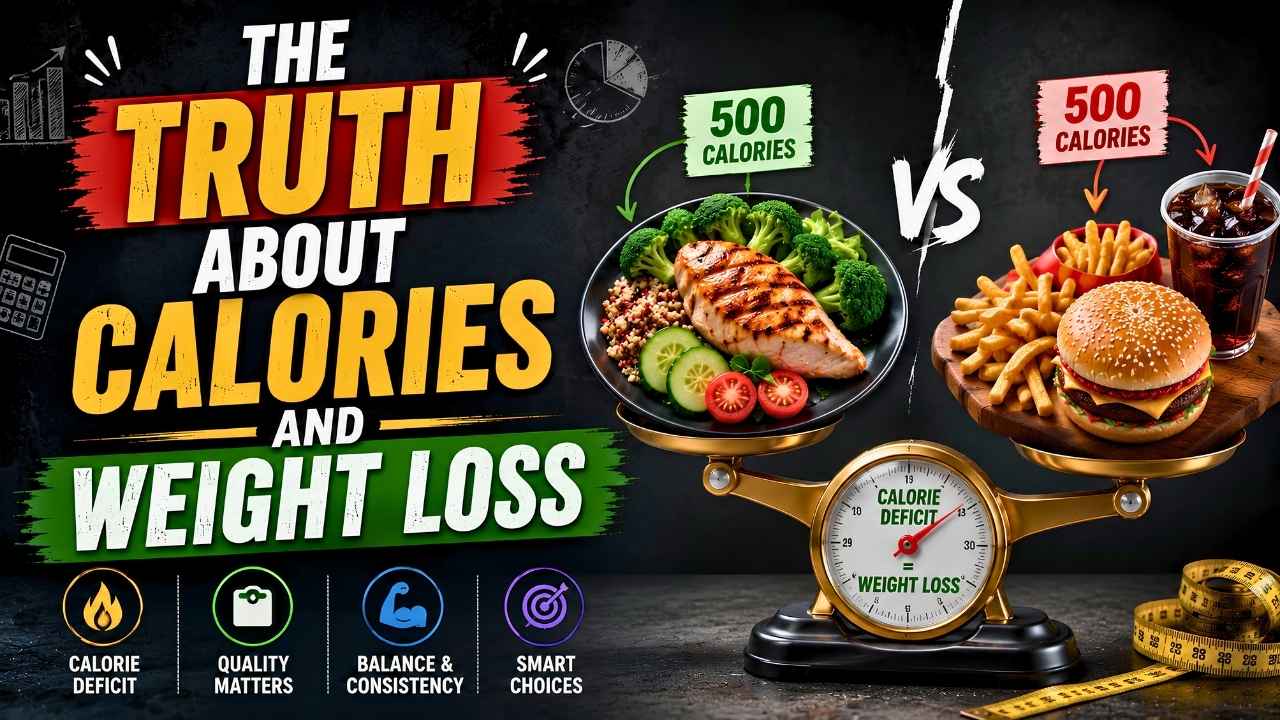
The Truth About: When it comes to weight loss, few topics create more confusion than calories. Some people believe that all calories are equal, while others claim calorie counting is completely unnecessary. Social media, diet trends, and fitness influencers often present conflicting information, leaving many people unsure about what truly matters.
The reality is that calories play a significant role in weight loss, but the story is far more complex than simply eating less food. Understanding how calories work, where they come from, and how they affect your body can help you make smarter decisions and achieve sustainable results.

In this comprehensive guide, we’ll uncover the truth about calories and weight loss, explain common misconceptions, and provide practical strategies for managing your calorie intake without feeling deprived.
What Is a Calorie?
A calorie is a unit of energy. It represents the amount of energy your body receives from food and beverages.

Everything you eat contains calories, whether it’s a healthy salad, a piece of fruit, a slice of pizza, or a handful of nuts.
Your body uses calories to:
- Power daily activities
- Support organ function
- Fuel exercise
- Maintain body temperature
- Repair and build tissues
Without calories, your body would not have the energy needed to survive.
How Weight Loss Actually Works
At its core, weight loss is influenced by energy balance.

There are three possible scenarios:
| Energy Balance | Result |
|---|---|
| Calories In = Calories Out | Weight Maintenance |
| Calories In > Calories Out | Weight Gain |
| Calories In < Calories Out | Weight Loss |
This concept is often referred to as a calorie deficit.

When you consume fewer calories than your body burns, it must use stored energy, including body fat, to meet its needs.
Over time, this leads to weight loss.

Understanding Calories In
Calories in refers to the calories you consume through food and beverages.
Sources include:

- Fruits
- Vegetables
- Meat
- Dairy products
- Grains
- Snacks
- Soft drinks
- Alcohol
Even healthy foods contribute calories.
For example:
| Food | Approximate Calories |
| Apple | 95 |
| Banana | 105 |
| Chicken Breast (100g) | 165 |
| Avocado | 240 |
| Peanut Butter (2 tbsp) | 190 |
| Slice of Pizza | 280–350 |
The source of calories matters because different foods affect hunger, metabolism, and health differently.
Understanding Calories Out
Calories out refers to the energy your body burns each day.

This includes:
Basal Metabolic Rate (BMR)
Your BMR is the energy required to keep you alive.

It supports:
- Breathing
- Heart function
- Brain activity
- Cellular repair
For most people, BMR accounts for approximately 60–70% of daily calorie expenditure.
Physical Activity
Exercise and movement increase calorie burn.
Examples include:
- Walking
- Running
- Strength training
- Cycling
- Swimming
Thermic Effect of Food
Your body burns calories digesting food.
Protein generally requires more energy to digest than fats and carbohydrates.
Non-Exercise Activity Thermogenesis (NEAT)
NEAT includes everyday movements such as:
- Standing
- Cleaning
- Gardening
- Walking around the office
- Taking stairs
Small movements throughout the day can significantly impact calorie expenditure.
Are All Calories Equal?
This is one of the biggest debates in nutrition.
Technically, a calorie is a calorie from an energy standpoint.
However, not all calories affect the body the same way.
For example:
200 calories from vegetables will impact your hunger, digestion, and nutrient intake differently than 200 calories from candy.
Consider these differences:
| Food Type | Satiety | Nutrients |
| Vegetables | High | Very High |
| Lean Protein | Very High | High |
| Whole Grains | Moderate | High |
| Candy | Low | Minimal |
| Sugary Drinks | Very Low | Minimal |
This is why food quality matters alongside calorie quantity.
Why Protein Matters for Weight Loss
Protein is often called the king of weight loss nutrients.
Benefits include:
- Increased fullness
- Reduced cravings
- Preservation of muscle mass
- Higher calorie burn during digestion
Protein-rich foods include:
- Eggs
- Fish
- Chicken
- Greek yogurt
- Cottage cheese
- Lentils
- Tofu
People who eat sufficient protein often find it easier to maintain a calorie deficit.
The Role of Carbohydrates
Carbohydrates have received a lot of criticism in recent years.
However, carbs are not inherently fattening.
Healthy carbohydrate sources include:
- Fruits
- Vegetables
- Oats
- Brown rice
- Sweet potatoes
- Whole grains
Problems typically arise when carbohydrates come primarily from:
- Sugary snacks
- Soft drinks
- Pastries
- Highly processed foods
Quality matters more than simply avoiding carbs.
The Importance of Healthy Fats
Fat is often misunderstood.
Healthy fats play essential roles in:
- Hormone production
- Brain function
- Cell health
- Nutrient absorption
Good sources include:
- Avocados
- Olive oil
- Nuts
- Seeds
- Fatty fish
Because fat contains more calories per gram than protein or carbohydrates, portion control remains important.
Common Calorie Myths
Myth 1: Eating Late at Night Causes Weight Gain
Weight gain occurs when overall calorie intake exceeds calorie expenditure.
Eating at night does not automatically lead to fat gain.
Myth 2: Certain Foods Burn More Calories Than They Contain
No food creates a negative calorie effect large enough to produce significant weight loss.
Myth 3: Healthy Foods Have Unlimited Calories
Even nutritious foods can contribute to weight gain if consumed excessively.
Myth 4: You Must Count Every Calorie
While calorie tracking can help, many people successfully lose weight through portion control and mindful eating.
Why Weight Loss Is More Than Just Calories
Although calories matter, several additional factors influence weight loss.
Sleep
Poor sleep can increase hunger hormones and cravings.
Stress
Chronic stress often leads to emotional eating.
Hormones
Hormonal imbalances can affect appetite and metabolism.
Physical Activity
Exercise supports calorie expenditure and muscle maintenance.
Food Quality
Nutrient-dense foods help regulate hunger more effectively than highly processed foods.
Hidden Sources of Calories
Many people underestimate calorie intake.
Common hidden calorie sources include:
| Source | Calories |
| Coffee Creamers | 50–100 per serving |
| Salad Dressings | 100–200 per serving |
| Sugary Drinks | 150–300 per bottle |
| Cooking Oils | 120 per tablespoon |
| Alcohol | 100–300 per drink |
| Sauces | 50–150 per serving |
These calories can add up quickly.
Why Portion Sizes Matter
Portion sizes have increased dramatically over the years.
Restaurants often serve portions large enough for two or three people.
Helpful strategies include:
- Using smaller plates
- Measuring portions occasionally
- Reading nutrition labels
- Avoiding eating directly from large containers
Awareness often leads to better choices.
Can You Lose Weight Without Counting Calories?
Yes.
Many successful weight loss approaches focus on habits rather than strict calorie tracking.
Examples include:
- Prioritizing protein
- Eating more vegetables
- Practicing portion control
- Avoiding sugary beverages
- Limiting processed foods
However, calorie awareness still plays a role because energy balance ultimately determines weight change.
The Best Foods for a Calorie Deficit
Foods that promote fullness while providing relatively few calories can make weight loss easier.
Examples include:
Lean Proteins
- Chicken breast
- Turkey
- Fish
- Eggs
High-Fiber Foods
- Vegetables
- Fruits
- Beans
- Oats
Low-Calorie Volume Foods
- Cucumbers
- Lettuce
- Broccoli
- Cauliflower
These foods allow you to eat satisfying portions while maintaining a calorie deficit.
The Problem with Crash Diets
Crash diets often promise rapid weight loss.
Unfortunately, they usually result in:
- Muscle loss
- Extreme hunger
- Reduced metabolism
- Low energy
- Weight regain
Sustainable weight loss is generally slower but far more effective over the long term.
How to Create a Healthy Calorie Deficit
A moderate calorie deficit is usually the most sustainable approach.
Effective strategies include:
- Eating more protein
- Increasing vegetable intake
- Reducing sugary drinks
- Walking more often
- Strength training regularly
- Prioritizing sleep
Small consistent changes often outperform extreme restrictions.
Signs You’re in a Healthy Calorie Deficit
Positive indicators include:
- Steady weight loss
- Good energy levels
- Improved fitness
- Better sleep
- Manageable hunger
If you constantly feel exhausted or deprived, your deficit may be too aggressive.
Long-Term Weight Loss Success
Successful weight loss isn’t about temporary dieting.
It’s about creating habits you can maintain for years.
Focus on:
- Consistency
- Balanced nutrition
- Regular movement
- Adequate sleep
- Stress management
These habits support both weight loss and overall health.
Key Highlights
- Calories are units of energy that fuel the body.
- Weight loss occurs when you consistently consume fewer calories than you burn.
- Food quality matters alongside calorie quantity.
- Protein helps increase fullness and preserve muscle.
- Hidden calories from drinks, sauces, and oils can slow progress.
- Portion control remains important, even with healthy foods.
- Sleep, stress, and activity levels all influence weight loss.
- Crash diets often lead to temporary results and long-term frustration.
- A moderate calorie deficit is usually the most sustainable strategy.
- Long-term success comes from consistent healthy habits.
Final Words
The truth about calories and weight loss is both simple and nuanced. Calories matter because they determine whether you gain, lose, or maintain weight. However, successful weight management involves much more than simply counting numbers. The quality of your food, your protein intake, sleep habits, stress levels, physical activity, and consistency all influence your results.
Rather than obsessing over every calorie, focus on building healthy habits that naturally support a calorie deficit. Choose nutrient-dense foods, prioritize protein, stay active, sleep well, and practice portion control. These strategies not only help you lose weight but also improve your overall health and well-being.
Remember that sustainable weight loss is a journey, not a race. Small improvements repeated consistently will always outperform extreme diets and short-term fixes. Stay patient, trust the process, and focus on creating a lifestyle that supports long-term success.
FAQs
What is a calorie deficit?
A calorie deficit occurs when you consume fewer calories than your body burns, leading to weight loss over time.
Do I need to count calories to lose weight?
No. Many people lose weight through mindful eating, portion control, and healthier food choices without strict calorie tracking.
Are all calories the same?
From an energy perspective, yes. However, different foods affect hunger, digestion, and overall health differently.
How many calories should I eat to lose weight?
Calorie needs vary based on age, gender, activity level, and body size. A moderate calorie deficit is generally recommended.
Can I eat carbohydrates and still lose weight?
Absolutely. Weight loss depends on overall calorie balance, not simply avoiding carbohydrates.
Why am I not losing weight despite eating healthy?
You may be consuming more calories than you realize through portion sizes, snacks, beverages, or hidden ingredients.
Is exercise necessary for weight loss?
Exercise is helpful but not mandatory. Nutrition plays the largest role in creating a calorie deficit.
Can eating too little slow weight loss?
Yes. Extremely low-calorie diets can reduce energy levels, increase hunger, and make long-term adherence difficult.