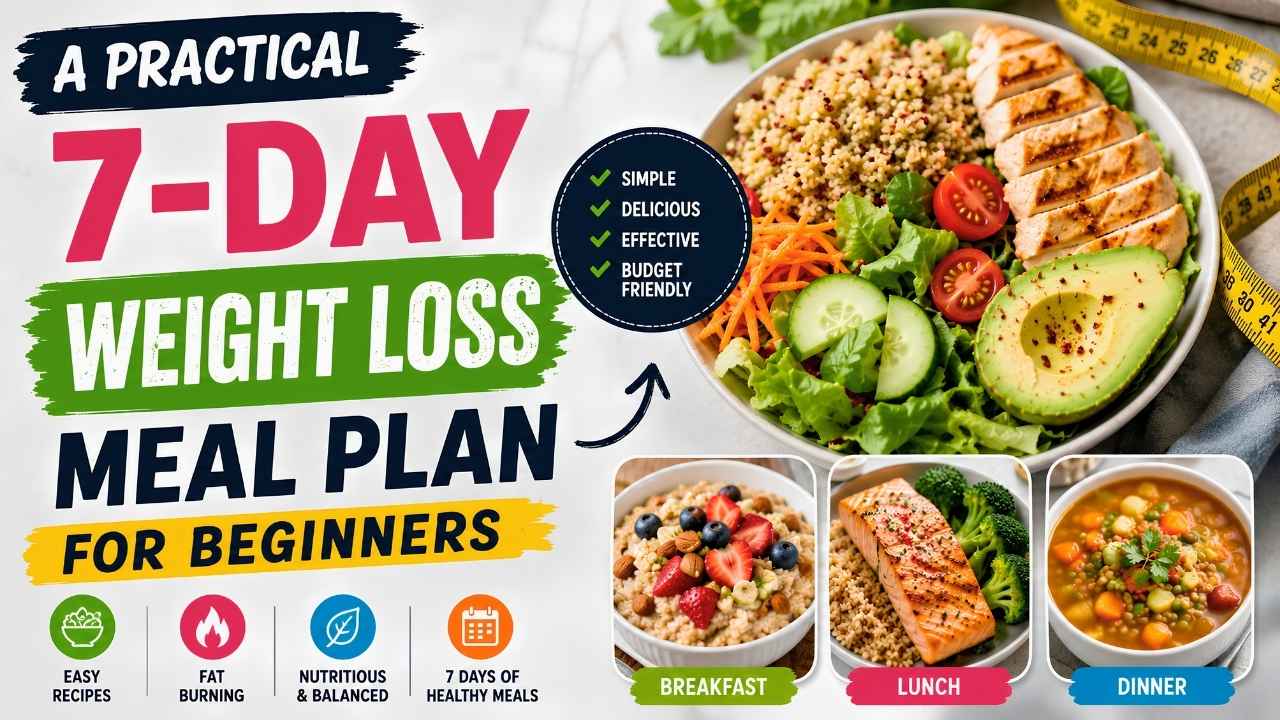
SA Practical 7-Day Weight Loss tarting a weight loss journey can feel overwhelming, especially when you’re constantly exposed to conflicting diet advice, restrictive meal plans, and unrealistic transformation stories. Many beginners struggle because they don’t know what to eat, when to eat, or how much to eat. As a result, they often jump from one diet to another without seeing lasting results.
The good news is that successful weight loss doesn’t require starvation, expensive supplements, or complicated meal plans. What it does require is consistency, balanced nutrition, and a realistic approach that fits into your daily life.
This practical 7-day weight loss meal plan is designed specifically for beginners. It focuses on nutrient-dense foods, portion control, adequate protein, healthy fats, and fiber-rich carbohydrates. The goal is to help you create sustainable eating habits while maintaining a calorie deficit that supports healthy weight loss.
Whether you’re just beginning your journey or looking to reset your eating habits, this guide provides a simple roadmap to get started.

Why a Structured Meal Plan Helps Beginners
One of the biggest reasons people struggle with weight loss is decision fatigue.
Every day, you’re faced with choices about:
- Breakfast
- Lunch
- Dinner
- Snacks
- Drinks
- Restaurant meals
Without a plan, unhealthy convenience foods often become the default option.
A structured meal plan helps by:
- Reducing guesswork
- Improving consistency
- Preventing overeating
- Supporting calorie control
- Encouraging healthier choices
Most importantly, it makes healthy eating easier.
Basic Weight Loss Principles Before Starting
Before diving into the meal plan, it’s important to understand a few key principles.

Create a Moderate Calorie Deficit
Weight loss occurs when you consume fewer calories than your body burns.
The goal isn’t starvation. Instead, focus on a moderate calorie deficit that allows you to lose weight steadily while maintaining energy and muscle mass.

Prioritize Protein
Protein helps:
- Increase fullness
- Preserve muscle
- Reduce cravings
- Improve recovery
Include Fiber-Rich Foods
Fiber slows digestion and helps you stay satisfied longer.

Good sources include:
- Vegetables
- Fruits
- Whole grains
- Beans
- Lentils
Stay Hydrated
Water supports digestion, appetite control, and overall health.
Aim for consistent hydration throughout the day.
Weekly Meal Plan Overview
| Day | Focus |
|---|---|
| Day 1 | Balanced Start |
| Day 2 | High Protein |
| Day 3 | Fiber Focus |
| Day 4 | Energy Support |
| Day 5 | Lean Protein |
| Day 6 | Healthy Variety |
| Day 7 | Sustainable Eating |
Day 1: Balanced Start
Breakfast
Greek yogurt with mixed berries and a sprinkle of chia seeds.

Benefits:
- High protein
- Rich in antioxidants
- Supports fullness
Mid-Morning Snack
One apple with one tablespoon natural peanut butter.

Lunch
Grilled chicken salad with mixed greens, cucumber, tomatoes, carrots, and olive oil dressing.
Afternoon Snack
Handful of almonds.
Dinner
Grilled salmon with roasted vegetables and brown rice.
Daily Goal
Focus on hydration and portion awareness.
Day 2: High Protein Focus
Breakfast
Vegetable omelet with spinach, mushrooms, and tomatoes.
Snack
Low-fat cottage cheese with sliced strawberries.
Lunch
Turkey wrap using a whole-grain tortilla and fresh vegetables.
Snack
Carrot sticks with hummus.
Dinner
Baked chicken breast with steamed broccoli and quinoa.
Daily Goal
Prioritize protein at every meal.
Day 3: Fiber-Rich Day
Breakfast
Oatmeal topped with blueberries and cinnamon.
Snack
Orange slices.
Lunch
Lentil soup with a side salad.
Snack
Air-popped popcorn.
Dinner
Grilled fish with sweet potato and green beans.
Daily Goal
Increase fiber intake to support digestion and satiety.
Day 4: Energy and Balance
Breakfast
Protein smoothie made with berries, spinach, protein powder, and almond milk.
Snack
Boiled eggs.
Lunch
Chicken and quinoa bowl with mixed vegetables.
Snack
Greek yogurt.
Dinner
Lean beef stir-fry with colorful vegetables.
Daily Goal
Maintain consistent energy levels throughout the day.
Day 5: Lean Protein Emphasis
Breakfast
Scrambled eggs with avocado toast.
Snack
Apple slices.
Lunch
Tuna salad with mixed greens.
Snack
Mixed nuts.
Dinner
Grilled turkey burger served with roasted vegetables.
Daily Goal
Support muscle maintenance while staying in a calorie deficit.
Day 6: Healthy Variety
Breakfast
Overnight oats with chia seeds and berries.
Snack
Cucumber slices with hummus.
Lunch
Grilled chicken and vegetable wrap.
Snack
Fresh fruit salad.
Dinner
Baked cod with brown rice and asparagus.
Daily Goal
Enjoy variety while maintaining healthy habits.
Day 7: Sustainable Eating
Breakfast
Whole-grain toast with eggs and sliced avocado.
Snack
Greek yogurt.
Lunch
Quinoa salad with vegetables and grilled chicken.
Snack
Handful of walnuts.
Dinner
Vegetable soup with lean protein.
Daily Goal
Prepare for long-term consistency rather than perfection.
Healthy Snack Options for Beginners
Snacks can help control hunger and prevent overeating.
| Snack | Benefits |
| Greek Yogurt | High protein |
| Apple and Peanut Butter | Fiber and healthy fats |
| Boiled Eggs | Protein-rich |
| Mixed Nuts | Healthy fats |
| Cottage Cheese | Slow-digesting protein |
| Hummus and Vegetables | Fiber and nutrients |
| Fruit Salad | Naturally sweet |
| Roasted Chickpeas | Crunchy and filling |
Foods to Prioritize During Weight Loss
The most successful weight loss diets often share one thing in common: nutrient-dense foods.
Lean Proteins
- Chicken breast
- Turkey
- Fish
- Eggs
- Greek yogurt
Vegetables
- Broccoli
- Spinach
- Carrots
- Bell peppers
- Cauliflower
Fruits
- Apples
- Berries
- Oranges
- Pears
- Kiwi
Whole Grains
- Brown rice
- Oats
- Quinoa
- Whole wheat bread
Healthy Fats
- Avocados
- Nuts
- Seeds
- Olive oil
Foods to Limit
Weight loss becomes easier when you reduce highly processed foods.
Examples include:
- Sugary beverages
- Candy
- Pastries
- Fried foods
- Processed snacks
- Excess alcohol
These foods are often calorie-dense and less filling.
Grocery Shopping List for the Week
Protein Sources
- Eggs
- Chicken breast
- Salmon
- Turkey
- Greek yogurt
- Cottage cheese
Vegetables
- Spinach
- Broccoli
- Cucumbers
- Tomatoes
- Bell peppers
Fruits
- Apples
- Berries
- Oranges
- Bananas
Healthy Fats
- Avocados
- Almonds
- Walnuts
- Peanut butter
Whole Grains
- Oats
- Brown rice
- Quinoa
- Whole-grain bread
Having these foods available makes healthy choices much easier.
Common Beginner Weight Loss Mistakes
Skipping Meals
Skipping meals often leads to overeating later.
Drinking Calories
Sugary drinks can quickly increase daily calorie intake.
Avoiding Protein
Low protein intake often results in increased hunger.
Unrealistic Expectations
Healthy weight loss takes time.
Lack of Planning
Meal preparation helps prevent impulsive food choices.
Meal Prep Tips for Success
Preparing food in advance saves time and improves consistency.
Helpful strategies include:
- Cook proteins in bulk
- Wash vegetables ahead of time
- Portion snacks into containers
- Prepare overnight oats
- Freeze healthy meals
Meal prep reduces the temptation to rely on fast food.
Exercise Recommendations for Beginners
Nutrition is the foundation of weight loss, but exercise can accelerate results.
Walking
Aim for daily walks whenever possible.
Strength Training
Two to three sessions per week can support muscle maintenance.
Cardio
Moderate cardiovascular exercise helps increase calorie expenditure.
Flexibility Work
Stretching supports recovery and mobility.
What Results Can Beginners Expect?
Healthy weight loss typically ranges from:
| Time Frame | Expected Progress |
| 1 Week | Reduced bloating |
| 2–4 Weeks | Noticeable energy improvements |
| 1 Month | Several pounds lost |
| 2–3 Months | Significant habit changes |
| 6 Months | Major body composition improvements |
Remember that consistency matters more than speed.
How to Stay Motivated
Weight loss motivation naturally fluctuates.
Instead of relying solely on motivation:
- Create routines
- Track progress
- Celebrate small wins
- Focus on habits
- Be patient
Long-term success comes from consistency rather than perfection.
Key Highlights
- A structured meal plan simplifies healthy eating.
- Protein should be included in every meal.
- Fiber-rich foods help control hunger.
- Meal preparation improves consistency.
- Healthy snacks prevent overeating.
- Hydration supports appetite control.
- Whole foods should form the foundation of your diet.
- Weight loss requires a sustainable calorie deficit.
- Exercise supports but does not replace good nutrition.
- Small daily improvements lead to lasting results.
Final Words
Beginning a weight loss journey does not require extreme diets, complicated rules, or perfect eating habits. What it requires is a practical, sustainable plan that helps you make healthier choices consistently. This 7-day meal plan provides a simple framework built around balanced nutrition, portion control, and nutrient-dense foods that support both weight loss and overall health.
Remember that no meal plan is perfect for everyone. Use this guide as a starting point and adjust it based on your preferences, lifestyle, and goals. Focus on progress rather than perfection, and give yourself time to develop habits that can last a lifetime.
The most successful weight loss transformations are not built through short-term restrictions but through small daily actions repeated consistently. Start with one week, stay committed, and allow healthy habits to become part of your everyday routine.
FAQs
How many calories should beginners eat for weight loss?
Calorie needs vary depending on age, gender, activity level, and body size. Most people benefit from a moderate calorie deficit rather than extreme restriction.
Can I swap foods in this meal plan?
Yes. Similar foods with comparable nutritional value can be substituted based on personal preferences.
Is breakfast necessary for weight loss?
Not necessarily. However, many people find that a protein-rich breakfast helps control hunger throughout the day.
How much water should I drink daily?
Most adults benefit from drinking several glasses of water throughout the day, adjusting for activity level and climate.
Can I have cheat meals?
Occasional treats can fit into a balanced lifestyle when consumed in moderation.
Do I need supplements?
Most nutrients can be obtained through a balanced diet. Supplements may be useful in certain situations but are not required for weight loss.
How fast should I lose weight?
A healthy rate is typically one to two pounds per week.
What if I make a mistake?
One meal or one day will not ruin your progress. Simply return to healthy habits at the next opportunity.