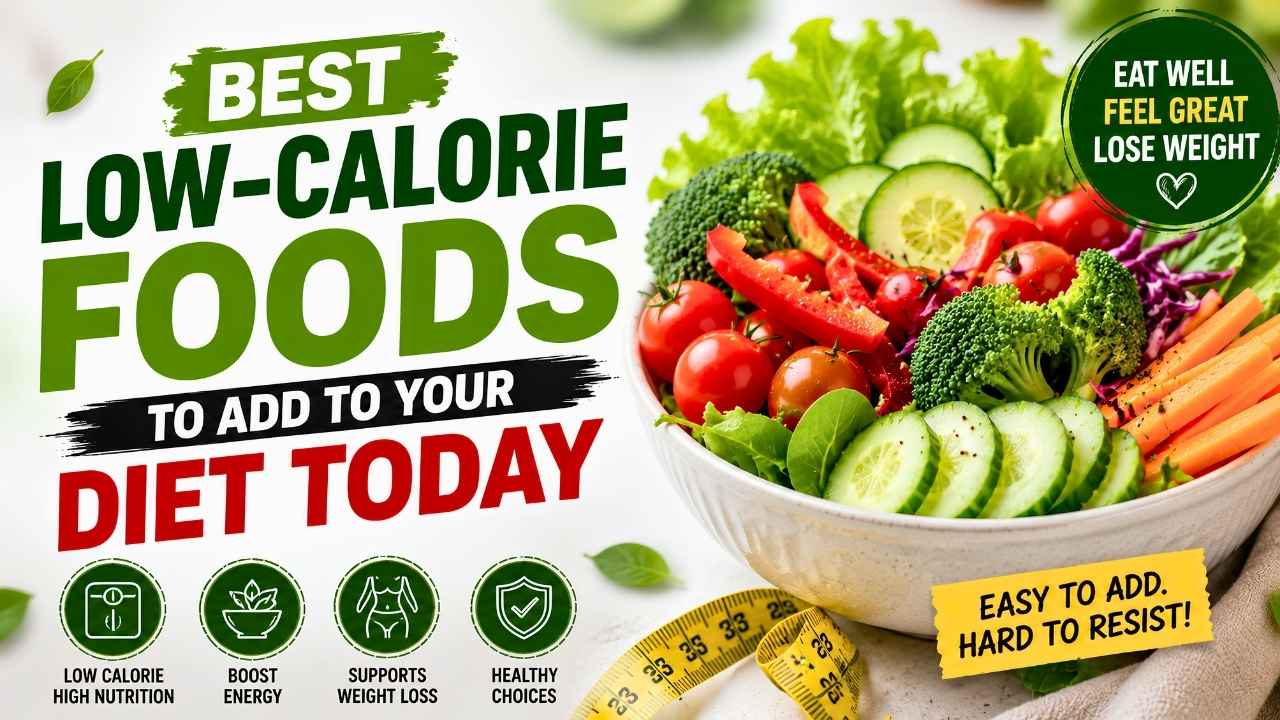
Best Low-Calorie Foods: Losing weight doesn’t mean you have to eat tiny portions, feel hungry all day, or give up delicious food. One of the smartest strategies for healthy weight management is choosing foods that are naturally low in calories but high in nutrients. These foods allow you to eat satisfying portions while keeping your calorie intake under control.
Many people assume weight loss is all about eating less. While maintaining a calorie deficit is important, the quality of your food choices plays a major role in determining how hungry, energized, and satisfied you feel throughout the day.
Low-calorie foods are often packed with fiber, water, vitamins, minerals, and antioxidants. They help fill your stomach, reduce cravings, and support overall health while making weight loss easier and more sustainable.
In this guide, you’ll discover some of the best low-calorie foods to add to your diet today, learn why they work so well for weight management, and explore practical ways to include them in your daily meals.
Why Low-Calorie Foods Matter for Weight Loss
Weight loss occurs when you consistently consume fewer calories than your body burns.
However, eating fewer calories does not mean starving yourself.
The secret is choosing foods that provide maximum volume and nutrition with fewer calories.
Benefits of low-calorie foods include:
- Increased fullness
- Better portion control
- Reduced hunger
- Improved nutrient intake
- Easier calorie management
- Better digestion
- Sustainable weight loss
Many low-calorie foods contain high amounts of water and fiber, which help create a feeling of fullness without significantly increasing calorie intake.
What Makes a Food Low in Calories?
Low-calorie foods typically share several characteristics:

| Characteristic | Benefit |
|---|---|
| High Water Content | Increases fullness |
| High Fiber Content | Slows digestion |
| Nutrient Dense | Provides vitamins and minerals |
| Low Fat Content | Reduces calorie density |
| Minimally Processed | Supports better appetite control |
Foods rich in water and fiber tend to provide the greatest satisfaction for the fewest calories.
Understanding Calorie Density
Calorie density refers to the number of calories in a specific amount of food.

For example:
| Food | Approximate Calories per 100g |
| Cucumber | 15 |
| Lettuce | 15 |
| Watermelon | 30 |
| Apple | 52 |
| Chicken Breast | 165 |
| Peanut Butter | 588 |
Foods with low calorie density allow you to eat larger portions while consuming fewer calories.

1. Cucumbers
Cucumbers are among the lowest-calorie foods available.
They contain mostly water and provide a refreshing crunch.
Benefits include:
- Extremely low calories
- Hydrating
- Easy to add to meals
- Supports fullness
Ways to enjoy:

- Salads
- Sandwiches
- Healthy snacks
- Infused water
2. Lettuce
Lettuce serves as the foundation for many healthy meals.
It adds volume to dishes without significantly increasing calories.

Benefits:
- High water content
- Rich in vitamins
- Supports hydration
- Very low calorie
3. Spinach
Spinach is often considered a nutritional powerhouse.
A large serving provides valuable nutrients while remaining very low in calories.
Benefits:
- Rich in iron
- High in antioxidants
- Supports bone health
- Excellent for smoothies and salads
4. Broccoli
Broccoli combines low calories with impressive nutritional value.
Benefits include:
- High fiber
- Rich in vitamin C
- Supports digestion
- Promotes fullness
Broccoli works well roasted, steamed, or stir-fried.
5. Cauliflower
Cauliflower has become popular because of its versatility.
It can replace higher-calorie foods such as rice, mashed potatoes, and pizza crust.
Benefits:
- Low calorie
- High fiber
- Adaptable in recipes
- Nutrient rich
6. Zucchini
Zucchini is another versatile vegetable that supports weight loss.
Benefits:
- Low calorie density
- High water content
- Mild flavor
- Easy to cook
Popular uses include zucchini noodles and grilled zucchini slices.
7. Tomatoes
Tomatoes are naturally low in calories and packed with nutrients.
Benefits:
- Rich in antioxidants
- Supports heart health
- Adds flavor to meals
- Hydrating
8. Bell Peppers
Bell peppers provide color, crunch, and nutrients.
Benefits:
- High vitamin C content
- Low calorie
- Naturally sweet
- Rich in antioxidants
9. Celery
Celery has long been associated with healthy eating.
Benefits:
- High water content
- Crunchy texture
- Low calorie
- Great for snacking
Pairing celery with hummus creates a satisfying snack.
10. Mushrooms
Mushrooms add texture and flavor while remaining low in calories.
Benefits:
- Rich in nutrients
- Supports immune health
- Low calorie density
- Excellent meat substitute
11. Watermelon
Watermelon contains a high percentage of water, making it a refreshing weight-loss-friendly fruit.
Benefits:
- Naturally sweet
- Hydrating
- Low calorie
- Rich in vitamins
12. Strawberries
Strawberries provide sweetness without excessive calories.
Benefits:
- High vitamin C
- Rich in antioxidants
- Fiber content
- Naturally satisfying
13. Blueberries
Blueberries are among the most nutrient-dense fruits available.
Benefits:
- Antioxidant-rich
- Supports brain health
- Naturally sweet
- Low calorie
14. Apples
Apples combine fiber and water, making them highly filling.
Benefits:
- Portable snack
- Supports digestion
- Helps control hunger
- Naturally sweet
15. Grapefruit
Grapefruit is often included in weight-loss diets due to its low calorie density.
Benefits:
- High water content
- Rich in vitamin C
- Refreshing flavor
- Supports hydration
16. Greek Yogurt
Although not as low in calories as vegetables, Greek yogurt provides excellent protein content.
Benefits:
- High protein
- Supports fullness
- Versatile
- Rich in calcium
Choose plain varieties to avoid added sugar.
17. Cottage Cheese
Cottage cheese is another protein-rich, relatively low-calorie food.
Benefits:
- Slow-digesting protein
- Supports muscle maintenance
- Filling snack
- Nutrient dense
18. Egg Whites
Egg whites provide high-quality protein with very few calories.
Benefits:
- High protein
- Low fat
- Versatile
- Supports satiety
19. Lean Chicken Breast
Chicken breast is one of the most popular weight-loss foods.
Benefits:
- Lean protein
- Supports muscle maintenance
- Highly filling
- Easy to prepare
20. Vegetable Soup
Broth-based vegetable soups can be extremely filling.
Benefits:
- High water content
- Low calorie density
- Supports hydration
- Helps control appetite
Best Low-Calorie Foods Comparison Table
| Food | Calories per 100g | Main Benefit |
| Cucumber | 15 | Hydration |
| Lettuce | 15 | Volume |
| Celery | 16 | Crunch |
| Tomato | 18 | Antioxidants |
| Zucchini | 17 | Versatility |
| Mushrooms | 22 | Nutrients |
| Broccoli | 34 | Fiber |
| Cauliflower | 25 | Low-Calorie Substitute |
| Watermelon | 30 | Hydration |
| Strawberries | 32 | Vitamin C |
| Apple | 52 | Fiber |
| Greek Yogurt | 59 | Protein |
| Cottage Cheese | 98 | Protein |
| Egg Whites | 52 | Lean Protein |
| Chicken Breast | 165 | Satiety |
How to Build Low-Calorie Meals
Creating balanced meals is easier when low-calorie foods make up the majority of your plate.
A simple approach:
Half the Plate
Fill with vegetables.
Examples:
- Spinach
- Broccoli
- Cucumbers
- Lettuce
One Quarter
Include lean protein.
Examples:
- Chicken
- Fish
- Greek yogurt
- Eggs
One Quarter
Add healthy carbohydrates.
Examples:
- Brown rice
- Quinoa
- Sweet potatoes
This structure helps control calories while maintaining satisfaction.
Common Mistakes When Choosing Low-Calorie Foods
Ignoring Protein
Vegetables alone may not keep you full for long.
Combine low-calorie foods with protein sources.
Overusing Low-Fat Processed Foods
Many “diet” products contain added sugar and artificial ingredients.
Drinking Calories
Sugary beverages can quickly increase calorie intake.
Skipping Healthy Fats
Healthy fats support hormone production and satiety.
Moderation is key.
Tips for Adding More Low-Calorie Foods to Your Diet
Start Meals with Salad
This increases fullness before higher-calorie foods are consumed.
Add Vegetables to Every Meal
Even small additions improve nutrition and satiety.
Replace High-Calorie Snacks
Choose:
- Fruit
- Vegetables
- Greek yogurt
Cook More at Home
Home-prepared meals offer greater control over ingredients and calories.
Key Highlights
- Low-calorie foods help support weight loss without excessive hunger.
- Vegetables and fruits provide volume, fiber, and nutrients.
- High-water-content foods improve fullness.
- Lean proteins complement low-calorie foods for better satiety.
- Calorie density plays an important role in weight management.
- Whole foods are generally more satisfying than processed alternatives.
- Balanced meals improve long-term adherence to healthy eating habits.
- Hydration and fiber work together to reduce hunger.
- Low-calorie foods support overall health beyond weight loss.
- Consistent healthy choices create lasting results.
Final Words
Adding low-calorie foods to your diet is one of the simplest and most effective strategies for improving nutrition and supporting weight loss. These foods help you eat satisfying portions, reduce hunger, and maintain a calorie deficit without feeling deprived. By focusing on vegetables, fruits, lean proteins, and nutrient-dense whole foods, you can create meals that are both enjoyable and supportive of your health goals.
Remember that successful weight loss is not about eating as little as possible. It’s about making smarter choices that help you stay full, energized, and consistent over time. Start by incorporating a few of the foods from this list into your daily routine, and you’ll likely find that healthy eating becomes easier, more enjoyable, and more sustainable for the long term.
FAQs
What are the lowest-calorie foods available?
Cucumbers, lettuce, celery, zucchini, spinach, and tomatoes are among the lowest-calorie foods.
Can I eat unlimited low-calorie foods?
While many low-calorie foods are difficult to overeat, portion awareness is still important for overall balance.
Are fruits good for weight loss?
Yes. Most fruits provide fiber, vitamins, minerals, and natural sweetness while remaining relatively low in calories.
Is popcorn considered low calorie?
Air-popped popcorn can be a low-calorie snack when prepared without excessive butter or sugar.
Why do low-calorie foods help with weight loss?
They allow you to eat larger portions while consuming fewer calories, helping control hunger.
Should I only eat low-calorie foods to lose weight?
No. A balanced diet should also include protein, healthy fats, and complex carbohydrates.
Are low-calorie foods filling?
Many are highly filling because of their water and fiber content.
What is calorie density?
Calorie density refers to the number of calories in a specific weight or volume of food.