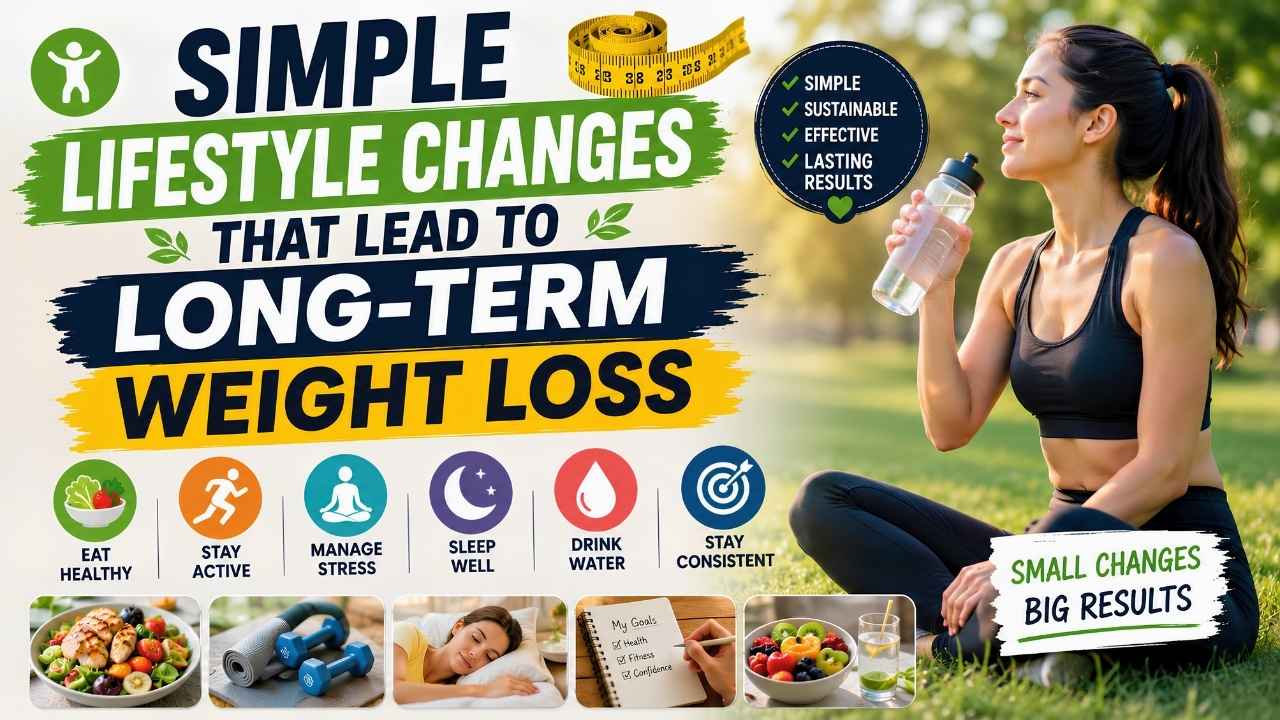
Simple Lifestyle Changes: When most people think about weight loss, they often imagine strict diets, exhausting workout routines, and drastic lifestyle overhauls. While these approaches may produce short-term results, they are rarely sustainable. In fact, many people regain the weight they lose because the methods they followed were too difficult to maintain over time.
The truth is that lasting weight loss rarely comes from extreme changes. Instead, it is often the result of small, consistent lifestyle habits that gradually become part of everyday life. These simple adjustments may seem insignificant at first, but over weeks, months, and years, they can create remarkable transformations.

Long-term weight loss is not about perfection. It is about creating healthy habits that fit naturally into your lifestyle while improving your overall health, energy levels, and well-being.
In this guide, you’ll discover practical lifestyle changes that can help you lose weight, maintain your results, and build a healthier future.

Why Lifestyle Changes Work Better Than Diets
Many diets focus on temporary restrictions.
Common examples include:

- Eliminating entire food groups
- Extremely low-calorie eating
- Juice cleanses
- Short-term detox plans
While these approaches may lead to rapid weight loss initially, they are often difficult to sustain.
Lifestyle changes work differently.

Instead of temporary restrictions, they focus on creating habits that become part of your daily routine.
Benefits include:

- Greater consistency
- Better long-term adherence
- Improved physical health
- Reduced stress around food
- Sustainable weight management
The goal is not to follow a diet forever. The goal is to build a lifestyle that naturally supports a healthy body weight.
The Power of Small Changes
Many people underestimate the impact of small improvements.

For example:
- Walking 20 minutes daily
- Drinking one extra glass of water
- Adding vegetables to meals
- Going to bed 30 minutes earlier
Individually, these habits may seem minor.

However, repeated consistently, they can create significant long-term results.
The key is focusing on progress rather than dramatic overnight transformations.

Lifestyle Change #1: Prioritize Whole Foods
One of the simplest ways to improve your diet is by eating more whole foods.
Whole foods are minimally processed and closer to their natural form.

Examples include:
- Fruits
- Vegetables
- Whole grains
- Lean proteins
- Nuts
- Seeds
- Legumes
Whole foods tend to be:

| Benefit | Impact |
|---|---|
| More Filling | Helps control hunger |
| Higher in Nutrients | Supports overall health |
| Lower in Added Sugar | Improves calorie control |
| Rich in Fiber | Enhances digestion |
Focusing on whole foods naturally improves the quality of your diet.
Lifestyle Change #2: Drink More Water
Hydration plays a crucial role in weight management.
Many people mistake thirst for hunger and consume unnecessary calories as a result.
Benefits of drinking more water include:
- Improved digestion
- Better energy levels
- Reduced appetite
- Enhanced workout performance
Simple ways to increase water intake:
- Carry a reusable water bottle
- Drink water before meals
- Add lemon or cucumber for flavor
- Set hydration reminders
Lifestyle Change #3: Walk More Throughout the Day
Walking is one of the most underrated forms of exercise.
Unlike intense workouts, walking is accessible, low-impact, and easy to maintain.
Benefits include:
- Increased calorie burn
- Improved cardiovascular health
- Better mood
- Reduced stress
Simple ways to walk more:
- Use stairs instead of elevators
- Park farther away
- Take walking breaks during work
- Walk after meals
Even modest increases in daily movement can contribute significantly to long-term weight loss.
Lifestyle Change #4: Eat More Protein
Protein is one of the most important nutrients for weight management.
Benefits include:
- Increased fullness
- Reduced cravings
- Preservation of muscle mass
- Better recovery from exercise
Protein-rich foods include:
- Eggs
- Chicken
- Fish
- Greek yogurt
- Cottage cheese
- Lentils
- Beans
Including protein at every meal helps improve satiety and calorie control.
Lifestyle Change #5: Improve Sleep Quality
Sleep is often overlooked when discussing weight loss.
Poor sleep can influence:
- Hunger hormones
- Food cravings
- Energy levels
- Motivation
People who consistently get inadequate sleep often find it more difficult to maintain healthy habits.
Tips for better sleep:
- Maintain a consistent schedule
- Limit screen time before bed
- Keep your bedroom cool and dark
- Avoid caffeine late in the day
Most adults benefit from seven to nine hours of sleep each night.
Lifestyle Change #6: Slow Down While Eating
Many people eat quickly without paying attention to hunger or fullness cues.
Eating slowly allows your body time to recognize satisfaction.
Benefits include:
- Better portion control
- Improved digestion
- Increased meal enjoyment
- Reduced overeating
Simple strategies:
- Chew thoroughly
- Put utensils down between bites
- Avoid distractions during meals
Mindful eating encourages a healthier relationship with food.
Lifestyle Change #7: Control Portion Sizes
Healthy foods still contain calories.
Portion awareness can help prevent accidental overeating.
Helpful methods include:
- Using smaller plates
- Measuring portions occasionally
- Reading nutrition labels
- Avoiding eating directly from packages
The goal is awareness, not obsession.
Lifestyle Change #8: Plan Your Meals
Meal planning removes much of the guesswork from healthy eating.
Benefits include:
- Better food choices
- Reduced impulse eating
- Less stress
- Improved consistency
Even planning a few meals in advance can make a significant difference.
Lifestyle Change #9: Reduce Sugary Drinks
Sugary beverages are one of the easiest sources of excess calories.
Examples include:
- Soda
- Sweetened coffee drinks
- Energy drinks
- Fruit juices
Healthier alternatives:
- Water
- Sparkling water
- Unsweetened tea
- Black coffee
Reducing liquid calories can create a substantial calorie deficit over time.
Lifestyle Change #10: Increase Fiber Intake
Fiber promotes fullness and supports digestive health.
Good sources include:
- Vegetables
- Fruits
- Whole grains
- Beans
- Lentils
Benefits include:
- Reduced hunger
- Better digestion
- Improved blood sugar control
Many people consume less fiber than recommended.
Lifestyle Change #11: Strength Train Regularly
Building muscle supports long-term weight management.
Benefits include:
- Higher resting metabolism
- Improved body composition
- Better strength
- Enhanced confidence
You don’t need complicated workouts.
Even two to three weekly sessions can produce meaningful results.
Lifestyle Change #12: Manage Stress Effectively
Stress often leads to emotional eating and poor food choices.
Common stress-management techniques include:
- Meditation
- Walking
- Deep breathing
- Journaling
- Spending time outdoors
Reducing stress supports both mental and physical health.
Lifestyle Change #13: Stop Skipping Meals
Skipping meals may seem like a quick way to reduce calories.
However, it often leads to:
- Increased hunger
- Cravings
- Overeating later
Balanced meals throughout the day help maintain energy and appetite control.
Lifestyle Change #14: Focus on Consistency
Consistency is more important than perfection.
Many people quit because they believe one mistake ruins their progress.
The reality:
- One unhealthy meal won’t cause weight gain.
- One missed workout won’t ruin results.
What matters most is returning to healthy habits quickly.
Lifestyle Change #15: Track Your Progress
Tracking progress provides valuable feedback and motivation.
You can monitor:
- Weight
- Measurements
- Daily steps
- Workouts
- Food habits
Progress photos are especially useful because physical changes often occur before significant scale changes.
Lifestyle Change #16: Create a Supportive Environment
Your surroundings influence your behavior.
Helpful adjustments include:
- Keeping healthy foods visible
- Removing tempting junk food
- Preparing meals ahead of time
- Organizing workout equipment
A supportive environment makes healthy choices easier.
Lifestyle Change #17: Practice Mindful Eating
Mindful eating involves paying attention to your food and hunger signals.
Benefits include:
- Better satisfaction
- Reduced overeating
- Improved awareness
Avoid multitasking during meals whenever possible.
Lifestyle Change #18: Set Realistic Goals
Unrealistic goals often lead to disappointment.
Healthy weight loss typically occurs gradually.
Focus on:
- Small milestones
- Sustainable habits
- Long-term progress
Patience is essential.
Lifestyle Change #19: Reduce Late-Night Snacking
Many late-night snacks are driven by boredom rather than hunger.
Strategies include:
- Eating balanced meals earlier
- Drinking water
- Establishing an evening routine
Being mindful of nighttime eating can reduce unnecessary calorie intake.
Lifestyle Change #20: Celebrate Small Wins
Every healthy choice matters.
Celebrate achievements such as:
- Drinking more water
- Completing workouts
- Preparing healthy meals
- Improving sleep habits
Small victories create momentum.
Long-Term Weight Loss Habits Summary
| Habit | Benefit |
| Drinking More Water | Appetite control |
| Walking Daily | Increased calorie burn |
| Eating More Protein | Greater fullness |
| Better Sleep | Improved recovery |
| Portion Control | Calorie awareness |
| Meal Planning | Consistency |
| Strength Training | Muscle preservation |
| Stress Management | Reduced emotional eating |
| Mindful Eating | Better food choices |
| Goal Setting | Motivation and focus |
Common Mistakes That Prevent Long-Term Success
Relying on Motivation Alone
Motivation fluctuates. Habits create lasting results.
Following Extreme Diets
Restrictive diets are difficult to maintain.
Ignoring Sleep
Poor sleep can sabotage healthy habits.
Expecting Quick Results
Sustainable progress takes time.
Giving Up After Mistakes
Perfection is not required for success.
Key Highlights
- Long-term weight loss is built on sustainable lifestyle habits.
- Small changes often produce the most lasting results.
- Whole foods improve nutrition and satiety.
- Drinking more water supports appetite control.
- Walking is an effective and accessible form of exercise.
- Protein and fiber help reduce hunger.
- Sleep quality strongly influences weight management.
- Stress management supports healthier food choices.
- Consistency matters more than perfection.
- Healthy habits create lasting success.
Final Words
Long-term weight loss is not achieved through extreme diets, endless restrictions, or temporary bursts of motivation. It is built through simple lifestyle changes that become part of your everyday routine. By focusing on whole foods, staying active, improving sleep, managing stress, drinking more water, and maintaining consistency, you create a foundation for lasting success.
Remember that meaningful transformation does not happen overnight. Small habits repeated consistently over time are what ultimately produce lasting results. Instead of searching for the perfect diet, focus on building a lifestyle that supports your health, happiness, and long-term goals. The journey may take time, but the rewards are well worth the effort.
FAQs
What is the best lifestyle change for weight loss?
There is no single best change. Combining healthy eating, regular movement, adequate sleep, and consistency usually produces the best results.
How long does it take to see results?
Many people notice improvements in energy and habits within weeks, while visible weight changes often take longer.
Is walking enough for weight loss?
Walking can support weight loss, especially when combined with healthy eating habits.
Do I need to follow a strict diet?
No. Sustainable lifestyle changes are often more effective than restrictive diets.
Why is sleep important for weight loss?
Sleep affects hunger hormones, cravings, recovery, and energy levels.
How can I stop emotional eating?
Managing stress, practicing mindfulness, and identifying triggers can help reduce emotional eating.
Should I weigh myself daily?
Some people find daily tracking useful, while others prefer weekly measurements. Consistency matters more than frequency.
What if I have a bad day?
Simply return to healthy habits at the next meal or opportunity. One bad day does not erase your progress.