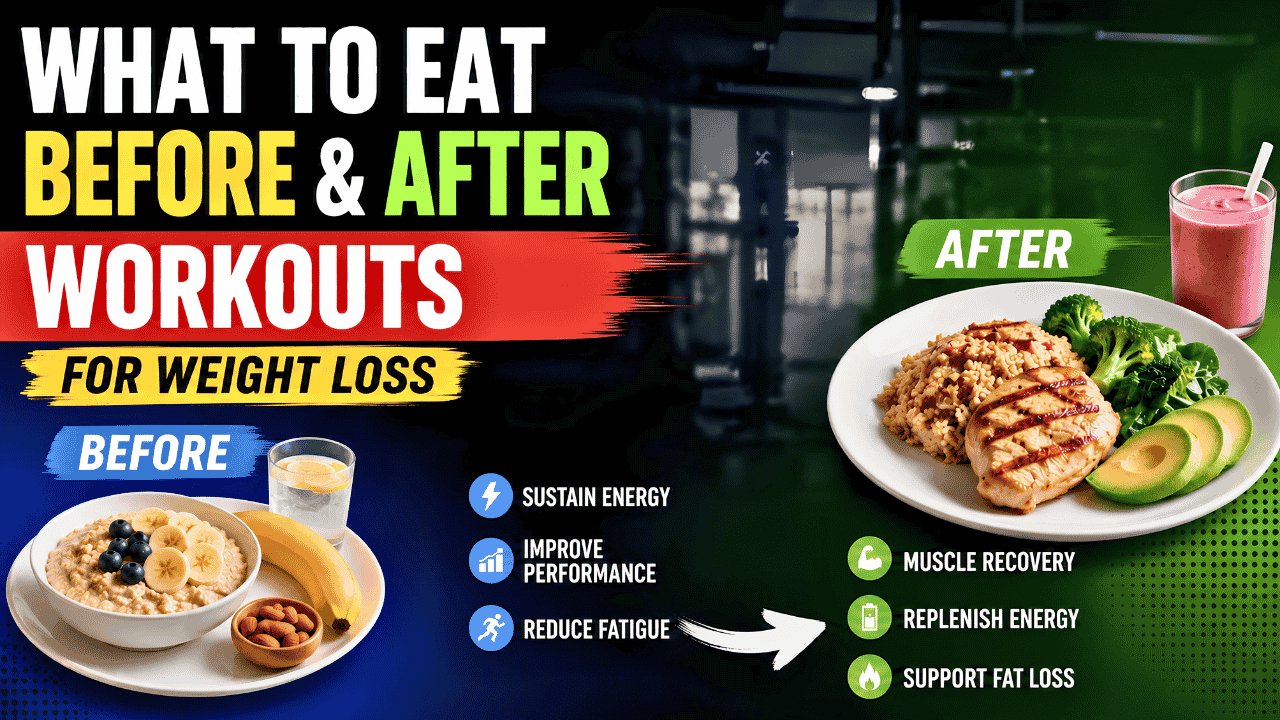
What to Eat Before and After: Weight loss is not only about exercising harder or spending more hours in the gym. Nutrition plays an equally important role in determining how effectively your body burns fat, preserves muscle mass, and recovers after physical activity. Many people focus intensely on workouts but overlook one of the most critical aspects of fitness success: what they eat before and after exercising.
The foods you choose before a workout can provide the energy needed to perform at your best, while post-workout meals help replenish nutrients, repair muscles, and support fat loss goals. Without proper nutrition, workouts may feel harder, recovery may be slower, and weight loss results may be less impressive.
Understanding the science behind pre-workout and post-workout nutrition can help you maximize every training session while maintaining a healthy calorie deficit. Whether you enjoy morning walks, strength training, high-intensity interval training, cycling, or running, the right nutrition strategy can significantly improve your results.
In this comprehensive guide, we will explore exactly what to eat before and after workouts for weight loss, the best food choices, common mistakes to avoid, and practical meal ideas that fit different lifestyles.
Why Workout Nutrition Matters for Weight Loss
Many people assume that eating less before and after exercise will help them lose weight faster. While creating a calorie deficit is necessary for weight loss, under-fueling can actually reduce workout performance and make fat loss more difficult.
Proper workout nutrition helps:
- Improve exercise performance
- Increase endurance and strength
- Preserve lean muscle mass
- Reduce muscle breakdown
- Support recovery
- Maintain energy levels
- Control hunger and cravings
- Improve metabolism
When your body receives the right nutrients at the right times, it can use stored fat more efficiently while maintaining muscle tissue. Since muscle burns more calories than fat, preserving muscle is essential for long-term weight management.
Understanding Pre-Workout Nutrition
Pre-workout nutrition refers to the foods and beverages consumed before exercise. The primary goal is to provide your body with enough energy to perform effectively without causing digestive discomfort.
A good pre-workout meal should include:
- Complex carbohydrates
- Moderate protein
- Low to moderate fat
- Adequate hydration
Carbohydrates provide quick energy, while protein helps reduce muscle breakdown during exercise.

How Long Before a Workout Should You Eat?
The timing of your meal depends on its size.
| Meal Type | Timing Before Workout |
|---|---|
| Large meal | 3-4 hours |
| Medium meal | 2-3 hours |
| Light snack | 30-60 minutes |
Eating too close to exercise may cause bloating, cramping, or discomfort. Eating too far in advance may leave you feeling hungry and low on energy.
Best Nutrients Before a Workout
Carbohydrates
Carbohydrates are the body’s preferred energy source during exercise.
Benefits include:

- Improved endurance
- Better performance
- Reduced fatigue
- Increased workout intensity
Good carbohydrate sources include:
- Oatmeal
- Whole grain bread
- Brown rice
- Sweet potatoes
- Bananas
- Apples
- Berries
Protein
Protein helps protect muscle tissue during workouts.
Benefits include:
- Reduced muscle breakdown
- Better muscle recovery
- Improved body composition
Good protein sources include:
- Greek yogurt
- Eggs
- Cottage cheese
- Whey protein
- Chicken breast
- Tofu
Healthy Fats
Healthy fats can provide sustained energy, especially during longer workouts.
Examples include:
- Avocado
- Nuts
- Seeds
- Nut butter
However, excessive fat before exercise may slow digestion.
Best Pre-Workout Meals for Weight Loss
Oatmeal and Banana
This combination provides slow-releasing carbohydrates and natural sugars for sustained energy.
Greek Yogurt with Berries
A high-protein snack that supports muscle maintenance and provides antioxidants.
Whole Wheat Toast with Peanut Butter
Offers a balance of carbohydrates, protein, and healthy fats.
Protein Smoothie
A quick option for busy individuals.
Ingredients:
- Whey protein
- Banana
- Almond milk
- Spinach
- Chia seeds
Boiled Eggs and Fruit
Simple, nutritious, and easy to digest.
Pre-Workout Nutrition for Morning Exercisers
Many people exercise first thing in the morning.
If exercising within 30 minutes of waking up, try:
- Banana
- Protein shake
- Apple
- Dates
- Greek yogurt
For low-intensity activities such as walking, some people may exercise on an empty stomach. However, for intense workouts, consuming a small snack is usually beneficial.
Should You Exercise Fasted for Weight Loss?
Fasted cardio involves exercising without eating beforehand.
Potential advantages:
- Increased fat oxidation
- Convenience
Potential disadvantages:
- Reduced workout intensity
- Increased fatigue
- Possible muscle loss
Research suggests overall calorie balance matters more than whether you exercise fasted or fed.
Understanding Post-Workout Nutrition
After exercise, your body enters a recovery phase.
During this time:
- Muscle glycogen stores need replenishment
- Muscle tissue requires repair
- Hydration levels need restoration
The primary goals of post-workout nutrition are:
- Recovery
- Muscle preservation
- Reduced soreness
- Enhanced fat loss
The Importance of Protein After Exercise
Protein is the most important nutrient after a workout.
Benefits include:
- Muscle repair
- Increased satiety
- Better body composition
- Improved recovery
Aim for approximately 20-40 grams of protein after training.
Excellent choices include:
- Chicken breast
- Fish
- Greek yogurt
- Eggs
- Cottage cheese
- Whey protein
- Tofu
- Tempeh
The Role of Carbohydrates After Exercise
Carbohydrates help restore glycogen stores depleted during exercise.
Best choices include:
- Rice
- Potatoes
- Oats
- Whole grains
- Fruits
- Sweet potatoes
For weight loss, carbohydrate intake should match your activity level and calorie goals.
Hydration After Exercise
Sweating causes fluid loss.
Replace lost fluids with:
- Water
- Electrolyte drinks
- Coconut water
Hydration helps:
- Recovery
- Performance
- Energy production
- Appetite regulation
Best Post-Workout Meals for Weight Loss
Grilled Chicken with Vegetables
High in protein and low in calories.
Salmon and Sweet Potato
Provides protein, healthy fats, and carbohydrates.
Protein Shake and Banana
Convenient and effective after workouts.
Greek Yogurt with Fruit
A balanced option rich in protein and nutrients.
Egg Omelet with Vegetables
Supports muscle recovery while keeping calories controlled.
Sample Pre and Post Workout Meal Plan
| Workout Time | Pre-Workout Meal | Post-Workout Meal |
| Morning | Banana + Coffee | Eggs + Oatmeal |
| Afternoon | Greek Yogurt + Fruit | Chicken + Rice |
| Evening | Toast + Peanut Butter | Fish + Vegetables |
Foods to Avoid Before Workouts
Certain foods may negatively affect performance.
Examples include:
- Fried foods
- Excessive cheese
- Sugary desserts
- Heavy cream sauces
- Carbonated drinks
These foods can cause digestive discomfort and sluggishness.
Foods to Avoid After Workouts
Avoid making recovery harder by consuming:
- Excessive junk food
- Deep-fried snacks
- Sugary beverages
- Large amounts of alcohol
While occasional treats are acceptable, recovery-focused nutrition should remain the priority.
Common Nutrition Mistakes That Slow Weight Loss
Skipping Meals
Skipping meals often leads to overeating later.
Eating Too Little
Extreme calorie restriction may reduce metabolism and energy levels.
Ignoring Protein Intake
Insufficient protein can lead to muscle loss.
Overestimating Calories Burned
Many people consume more calories than they burn during exercise.
Rewarding Workouts with Junk Food
Exercise should not be used as justification for unhealthy eating habits.
Weight Loss Nutrition for Strength Training
Strength training requires slightly higher protein intake.
Recommended focus:
- Protein before training
- Protein after training
- Adequate carbohydrates for performance
Examples:
- Chicken and rice
- Eggs and toast
- Protein smoothie
Weight Loss Nutrition for Cardio Workouts
Cardio sessions benefit from easily digestible carbohydrates.
Examples:
- Banana
- Oatmeal
- Fruit smoothie
Post-workout:
- Lean protein
- Fruits
- Vegetables
Weight Loss Nutrition for HIIT Training
HIIT workouts are highly demanding.
Pre-workout:
- Oats
- Fruit
- Yogurt
Post-workout:
- Protein shake
- Chicken breast
- Rice
- Vegetables
Vegetarian Pre and Post Workout Foods
Vegetarians have many excellent options.
Pre-workout:
- Oatmeal
- Fruit
- Peanut butter toast
Post-workout:
- Tofu stir fry
- Lentils
- Greek yogurt
- Cottage cheese
- Plant protein shakes
Vegan Pre and Post Workout Foods
Pre-workout:
- Banana
- Oats
- Almond butter
Post-workout:
- Tofu
- Tempeh
- Lentils
- Chickpeas
- Vegan protein powder
How Much Protein Do You Need for Weight Loss?
Most active individuals benefit from:
1.6–2.2 grams of protein per kilogram of body weight daily.
Higher protein intake helps:
- Preserve muscle
- Increase satiety
- Improve fat loss
Key Highlights
- Nutrition is as important as exercise for weight loss.
- Carbohydrates provide energy before workouts.
- Protein supports muscle maintenance and recovery.
- A balanced pre-workout meal improves performance.
- Post-workout nutrition enhances recovery and fat loss.
- Hydration plays a major role in workout success.
- Avoid highly processed foods around training sessions.
- Consistent healthy eating produces better long-term results.
- Preserving muscle is essential during weight loss.
- Proper nutrition helps control hunger and cravings.
FAQs
What is the best food to eat before a workout for weight loss?
A banana, oatmeal, or Greek yogurt with fruit are excellent choices because they provide energy without being overly heavy.
Should I eat before morning workouts?
For moderate to intense exercise, a small snack such as a banana or protein shake is recommended.
Is fasted cardio better for fat loss?
Fasted cardio may increase fat oxidation during exercise, but overall calorie balance remains the most important factor for weight loss.
How soon should I eat after a workout?
Ideally within one to two hours after exercise to support recovery and muscle repair.
Can I lose weight without eating after workouts?
You may still lose weight, but recovery, performance, and muscle preservation could suffer.
What is the best post-workout protein source?
Chicken breast, eggs, Greek yogurt, fish, cottage cheese, and whey protein are excellent options.
Are protein shakes necessary?
No. They are convenient but whole-food protein sources work equally well.
Should I eat carbohydrates after exercise?
Yes, especially after intense workouts, as carbohydrates help replenish glycogen stores.
How much water should I drink after exercise?
Drink enough to replace sweat losses and restore hydration levels. Water requirements vary by individual and workout intensity.
What foods should I avoid after workouts?
Avoid excessive junk food, sugary beverages, fried foods, and alcohol immediately after training.
Final Words
Successful weight loss is not simply about exercising more or eating less. It is about creating the right balance between physical activity and nutrition. Choosing the right foods before workouts can improve energy, endurance, and performance, while post-workout meals help repair muscles, control hunger, and support recovery.
A smart nutrition strategy allows your body to burn fat efficiently while preserving valuable muscle mass. By focusing on whole foods, adequate protein, quality carbohydrates, healthy fats, and proper hydration, you can maximize your workouts and achieve sustainable weight loss results.
Remember that consistency matters more than perfection. Small daily choices, repeated over time, create lasting transformation. Pair regular exercise with balanced nutrition, stay patient, and your weight loss journey will become healthier, more effective, and easier to maintain for the long term.