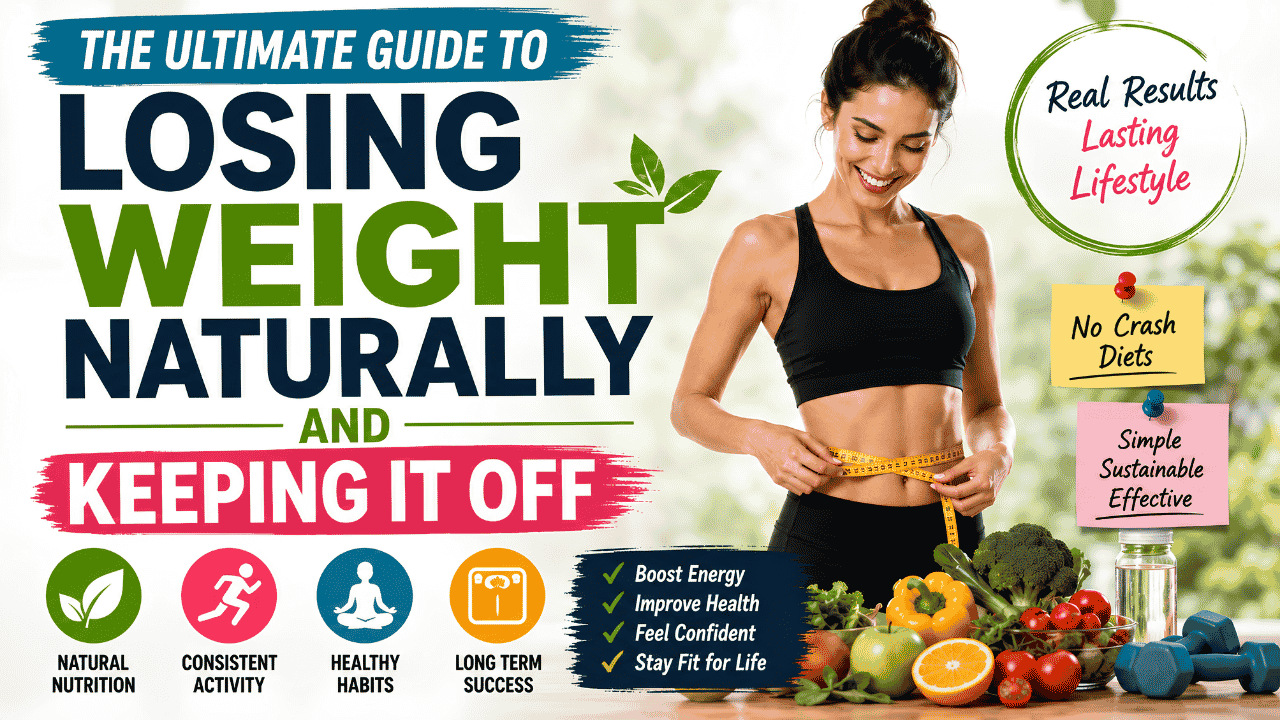
The Ultimate Guide to Losing Weight: Weight loss is one of the most searched health topics in the world. Every year, millions of people begin their weight-loss journey with excitement and determination. Unfortunately, many of them end up regaining the weight they worked so hard to lose. This cycle of losing and gaining weight can be frustrating, discouraging, and harmful to both physical and mental health.
The reason many weight-loss attempts fail is simple: people often focus on quick fixes instead of sustainable lifestyle changes. Crash diets, extreme workout plans, detox drinks, and miracle supplements may produce temporary results, but they rarely create long-term success.

True weight loss is not about finding the fastest solution. It is about developing healthy habits that support your body and can be maintained for years. Natural weight loss focuses on improving nutrition, increasing physical activity, managing stress, sleeping well, and creating a lifestyle that promotes long-term health.
This comprehensive guide will show you how to lose weight naturally, improve your overall health, and maintain your results without relying on restrictive diets or unrealistic fitness programs.

Understanding Weight Loss
Before beginning any weight-loss journey, it is important to understand how weight loss works.
At its core, weight loss occurs when your body burns more calories than it consumes. This is known as a calorie deficit.
When your body needs more energy than it receives from food, it begins using stored energy, including body fat.
Weight loss is influenced by several factors:

- Calorie intake
- Physical activity
- Sleep quality
- Stress levels
- Hormonal balance
- Age
- Genetics
- Lifestyle habits
While some factors cannot be controlled, many can be improved through daily choices.
Weight Loss vs Fat Loss
Many people use the terms weight loss and fat loss interchangeably, but they are different.

Weight loss refers to a reduction in overall body weight.
This can include:
- Water loss
- Muscle loss
- Fat loss
Fat loss specifically refers to reducing body fat while preserving lean muscle mass.
Fat loss is generally the healthier and more sustainable goal.

Comparison Table
| Weight Loss | Fat Loss |
|---|---|
| Includes water, muscle, and fat | Focuses mainly on body fat |
| Scale changes quickly | Progress is slower |
| May reduce muscle mass | Preserves muscle tissue |
| Often temporary | More sustainable |
Why Natural Weight Loss Is Better
Natural weight loss focuses on gradual improvements rather than extreme restrictions.
Benefits include:

- Better long-term results
- Improved health
- Sustainable habits
- Lower risk of weight regain
- Better relationship with food
- Increased energy levels
Natural approaches may take longer, but they often produce lasting success.
Setting Realistic Expectations
One of the biggest reasons people quit is unrealistic expectations.

Many advertisements promise dramatic results in a few weeks.
Healthy weight loss typically ranges from:

0.5 to 1 kilogram per week.
This rate helps preserve muscle, maintain energy levels, and reduce the likelihood of regaining weight later.
The Importance of Nutrition
Nutrition plays the largest role in weight management.
Exercise is valuable, but poor eating habits can easily undo the calories burned during workouts.
Healthy nutrition focuses on:
- Whole foods
- Balanced meals
- Portion control
- Nutrient density
- Consistency
A healthy eating pattern should feel sustainable rather than restrictive.
Building a Balanced Plate
One of the easiest ways to improve nutrition is to build balanced meals.
A simple plate method includes:
Healthy Plate Structure
| Portion | Food Type |
| 50% | Vegetables |
| 25% | Lean Protein |
| 25% | Healthy Carbohydrates |
This approach naturally improves nutrient intake and portion control.
The Role of Protein in Weight Loss
Protein is one of the most important nutrients during weight loss.
Benefits include:
- Increased fullness
- Reduced hunger
- Muscle preservation
- Better recovery
- Higher calorie burn during digestion
Good protein sources include:
- Eggs
- Chicken breast
- Fish
- Greek yogurt
- Cottage cheese
- Lentils
- Tofu
- Beans
Including protein at every meal can improve weight-loss success.
Choosing Healthy Carbohydrates
Carbohydrates often receive unnecessary criticism.
Healthy carbohydrates provide:
- Energy
- Fiber
- Vitamins
- Minerals
Examples include:
- Oats
- Brown rice
- Sweet potatoes
- Fruits
- Vegetables
- Whole grains
The goal is not eliminating carbohydrates but choosing higher-quality sources.
Understanding Healthy Fats
Healthy fats support many important body functions.
Benefits include:
- Hormone production
- Brain function
- Nutrient absorption
- Satiety
Healthy fat sources include:
- Avocados
- Nuts
- Seeds
- Olive oil
- Fatty fish
Moderation remains important because fats are calorie-dense.
Why Fiber Matters
Fiber is one of the most overlooked nutrients in weight loss.
Benefits include:
- Improved digestion
- Reduced hunger
- Better blood sugar control
- Increased fullness
Fiber-rich foods include:
- Fruits
- Vegetables
- Beans
- Lentils
- Whole grains
Increasing fiber intake naturally reduces overeating.
Portion Control Without Counting Every Calorie
Many people dislike calorie tracking.
Fortunately, portion control can be effective without constant counting.
Strategies include:
- Using smaller plates
- Eating slowly
- Avoiding distractions
- Stopping when satisfied
- Measuring portions occasionally
These habits help regulate calorie intake naturally.
Drinking More Water
Hydration plays an important role in weight management.
Benefits include:
- Appetite control
- Improved digestion
- Better energy levels
- Enhanced exercise performance
Daily Water Intake Guide
| Activity Level | Recommended Intake |
| Low Activity | 2 Liters |
| Moderate Activity | 2.5 Liters |
| High Activity | 3 Liters or More |
Water should be your primary beverage whenever possible.
Reducing Added Sugar
Excess sugar contributes to unnecessary calorie consumption.
Common sources include:
- Soft drinks
- Energy drinks
- Candy
- Desserts
- Sweetened coffee beverages
Reducing added sugar can significantly improve weight-loss results.
Meal Planning for Success
Meal planning helps eliminate unhealthy decisions.
Benefits include:
- Better food choices
- Reduced takeout meals
- Lower food costs
- Improved consistency
Even preparing meals two or three days ahead can make a major difference.
The Importance of Physical Activity
Weight loss is easier when nutrition and physical activity work together.
Exercise provides benefits beyond calorie burning.
These include:
- Improved mood
- Better cardiovascular health
- Increased strength
- Better sleep
- Stress reduction
The best exercise is the one you enjoy and can maintain consistently.
Walking: The Most Underrated Exercise
Walking is one of the simplest and most effective activities for weight loss.
Benefits include:
- Accessible for most people
- Low injury risk
- No equipment required
- Easy recovery
Ways to increase walking:
- Walk after meals
- Use stairs
- Walk during phone calls
- Park farther away
Small increases in daily movement can produce meaningful results.
Strength Training for Long-Term Success
Many people focus only on cardio.
Strength training offers unique benefits.
Benefits include:
- Preserving muscle mass
- Increasing metabolism
- Improving body composition
- Supporting healthy aging
Simple exercises include:
- Squats
- Push-ups
- Lunges
- Rows
- Planks
Two to four weekly sessions can provide excellent results.
Cardio and Fat Burning
Cardio remains a useful tool for weight loss.
Examples include:
- Running
- Cycling
- Swimming
- Hiking
- Dancing
Cardio improves heart health while increasing calorie expenditure.
Why Sleep Affects Weight Loss
Sleep is often ignored during weight-loss journeys.
Poor sleep may:
- Increase hunger hormones
- Reduce energy levels
- Increase cravings
- Slow recovery
Aim for seven to nine hours of quality sleep each night.
Managing Stress Naturally
Chronic stress can interfere with weight loss.
Stress often leads to:
- Emotional eating
- Cravings
- Poor sleep
- Reduced motivation
Healthy stress-management strategies include:
- Meditation
- Yoga
- Walking
- Journaling
- Deep breathing
Reducing stress supports both physical and mental health.
Avoiding Emotional Eating
Many people eat for reasons unrelated to hunger.
Common triggers include:
- Stress
- Boredom
- Anxiety
- Loneliness
Before eating, ask yourself:
“Am I physically hungry or emotionally hungry?”
This simple question can improve awareness and prevent overeating.
Building Healthy Habits That Last
Successful weight loss comes from habits rather than temporary motivation.
Examples include:
- Drinking water first thing in the morning
- Walking daily
- Preparing meals ahead of time
- Prioritizing sleep
- Eating vegetables regularly
Small habits performed consistently create lasting results.
Why Crash Diets Fail
Crash diets often produce quick weight loss.
However, they usually cause:
- Muscle loss
- Fatigue
- Nutritional deficiencies
- Weight regain
Most people cannot maintain extreme restrictions long term.
Sustainable habits always outperform short-term diets.
Sample One-Day Natural Weight Loss Meal Plan
| Meal | Example |
| Breakfast | Oatmeal with berries |
| Snack | Apple and almonds |
| Lunch | Grilled chicken salad |
| Snack | Greek yogurt |
| Dinner | Salmon with vegetables |
| Evening | Herbal tea |
This plan provides balanced nutrition and supports fat loss.
Tracking Progress Effectively
The scale is only one measurement.
Track additional factors such as:
- Waist circumference
- Progress photos
- Clothing fit
- Energy levels
- Strength improvements
These indicators often reveal progress before the scale changes.
Common Weight Loss Mistakes
Many people unknowingly slow their progress.
Common mistakes include:
- Skipping meals
- Drinking calories
- Ignoring protein intake
- Following extreme diets
- Neglecting sleep
- Expecting immediate results
Avoiding these mistakes improves long-term success.
Maintaining Weight Loss After Reaching Your Goal
Maintaining weight loss requires continuing healthy habits.
Focus on:
- Consistent eating patterns
- Regular activity
- Ongoing self-monitoring
- Flexible nutrition
Maintenance is not about perfection. It is about balance and consistency.
Creating a Lifestyle Instead of a Diet
The most successful people stop thinking in terms of temporary diets.
Instead, they create lifestyles that support health naturally.
A healthy lifestyle should:
- Feel realistic
- Fit your schedule
- Include foods you enjoy
- Support your goals
This mindset creates lasting results.
Key Highlights
- Natural weight loss focuses on sustainable habits.
- Fat loss is more important than simple weight loss.
- Nutrition plays the biggest role in body composition.
- Protein helps preserve muscle and increase satiety.
- Fiber supports appetite control and digestion.
- Walking is one of the most effective forms of exercise.
- Strength training helps maintain metabolism.
- Sleep significantly affects hunger and recovery.
- Stress management improves weight-loss success.
- Long-term habits create long-term results.
FAQs
What is the healthiest way to lose weight naturally?
The healthiest approach combines balanced nutrition, regular exercise, adequate sleep, hydration, and stress management.
How much weight can I lose naturally in a month?
Most experts recommend losing 2–4 kilograms per month through sustainable methods.
Do I need to count calories?
Not necessarily. Many people succeed by focusing on portion control and food quality.
Is walking enough for weight loss?
Walking can be very effective when combined with a healthy diet and consistent routine.
Should I avoid carbohydrates completely?
No. Healthy carbohydrates provide essential nutrients and energy.
How important is protein during weight loss?
Protein helps preserve muscle, reduce hunger, and support recovery.
Can poor sleep affect weight loss?
Yes. Poor sleep can increase cravings, hunger, and fatigue.
Why do people regain weight after dieting?
Many diets are too restrictive and difficult to maintain long term.
How long does sustainable weight loss take?
Healthy weight loss is gradual and often requires several months of consistent effort.
What is the secret to keeping weight off permanently?
The secret is maintaining sustainable habits rather than relying on temporary diets.
Final Words
Losing weight naturally and keeping it off is not about finding the latest trend or following extreme rules. It is about building a healthier lifestyle that you can maintain for years. By focusing on nutritious foods, regular physical activity, quality sleep, proper hydration, and stress management, you create a strong foundation for long-term success.
Remember that lasting transformation happens through small, consistent actions repeated every day. Progress may seem slow at times, but sustainable weight loss is always worth the effort. Stay patient, trust the process, and focus on creating habits that support both your physical health and overall well-being. When healthy choices become part of your lifestyle, maintaining your results becomes much easier and far more enjoyable.