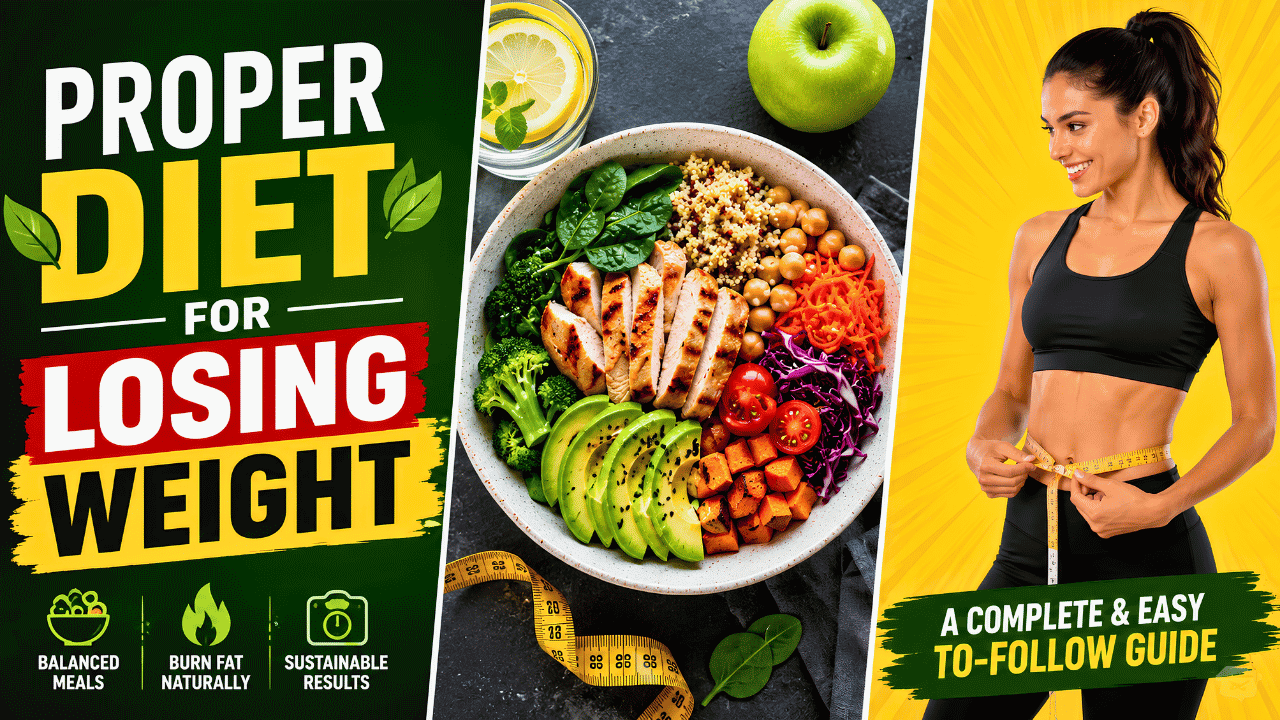
Proper Diet for Losing Weight: Losing weight is one of the most common health goals worldwide, yet many people struggle to achieve lasting results. The reason is simple: most weight-loss plans focus on quick fixes rather than sustainable habits. While exercise is important, diet plays the biggest role in successful weight loss. The foods you eat determine your calorie intake, energy levels, metabolism, and overall health.
A proper diet for losing weight is not about starving yourself or following extreme restrictions. Instead, it involves eating nutritious foods in the right portions while creating a calorie deficit that encourages your body to burn stored fat. A healthy weight-loss diet should be practical, enjoyable, and sustainable for the long term.
This guide covers everything you need to know about building a healthy diet for weight loss, including essential nutrients, meal planning, portion control, healthy food choices, common mistakes to avoid, and practical strategies for maintaining your results.
Understanding How Weight Loss Works

Before creating a diet plan, it is important to understand how weight loss happens.

Weight loss occurs when you consume fewer calories than your body burns. This is known as a calorie deficit. When your body does not get enough calories from food to meet its energy needs, it starts using stored fat for fuel.
Several factors influence weight loss:
- Daily calorie intake
- Physical activity level
- Age
- Gender
- Muscle mass
- Hormonal balance
- Sleep quality
- Stress levels
Although every person is different, a moderate calorie deficit generally leads to healthy and sustainable weight loss.
Why Diet Matters More Than Exercise
Exercise helps burn calories and improves fitness, but diet has a greater impact on weight loss because it directly affects calorie consumption.

For example:
| Activity | Approximate Calories Burned |
|---|---|
| 30 minutes walking | 150 calories |
| 30 minutes cycling | 250 calories |
| One cheeseburger | 500 calories |
| Large soda | 250 calories |
It is often easier to reduce calories through smarter food choices than trying to burn excess calories through exercise alone.

The most successful weight-loss programs combine healthy eating with regular physical activity.
Key Principles of a Weight-Loss Diet

A successful diet for weight loss follows several important principles.
Focus on Whole Foods
Whole foods are minimally processed and rich in nutrients. Examples include:
- Fruits
- Vegetables
- Whole grains
- Lean proteins
- Nuts
- Seeds
- Legumes
These foods help keep you full while providing essential vitamins and minerals.
Control Portion Sizes
Even healthy foods can contribute to weight gain when eaten in excessive amounts.
Useful portion control tips include:

- Use smaller plates
- Avoid eating directly from packages
- Measure servings occasionally
- Eat slowly
- Stop eating when comfortably satisfied
Increase Protein Intake
Protein is one of the most important nutrients for weight loss because it:
- Increases fullness
- Reduces hunger
- Preserves muscle mass
- Supports metabolism
Excellent protein sources include:

- Chicken breast
- Turkey
- Fish
- Eggs
- Greek yogurt
- Cottage cheese
- Lentils
- Beans
- Tofu
Eat More Fiber
Fiber slows digestion and promotes satiety.
High-fiber foods include:
- Oats
- Vegetables
- Fruits
- Whole grains
- Beans
- Chia seeds
People who consume more fiber often find it easier to maintain a healthy weight.
Essential Nutrients for Healthy Weight Loss
A balanced weight-loss diet should include all major nutrients.
| Nutrient | Function | Sources |
| Protein | Muscle maintenance and fullness | Chicken, fish, eggs, beans |
| Carbohydrates | Energy production | Whole grains, fruits |
| Healthy Fats | Hormone support | Avocados, nuts, olive oil |
| Fiber | Digestion and satiety | Vegetables, oats |
| Vitamins | Body functions | Fruits and vegetables |
| Minerals | Overall health | Nuts, seeds, dairy |
Eliminating entire food groups is usually unnecessary and may lead to nutritional deficiencies.
Best Foods for Weight Loss
Certain foods support weight management because they are filling and nutrient-dense.
Lean Proteins
Examples include:
- Chicken breast
- Turkey
- Fish
- Eggs
- Greek yogurt
- Low-fat dairy
Vegetables
Vegetables are naturally low in calories and high in fiber.
Top choices include:
- Spinach
- Broccoli
- Cauliflower
- Bell peppers
- Cucumber
- Zucchini
Fruits
Healthy fruits for weight loss include:
- Apples
- Berries
- Oranges
- Grapefruit
- Pears
Whole Grains
Better options include:
- Brown rice
- Quinoa
- Oats
- Whole wheat bread
- Barley
Healthy Fats
Choose:
- Olive oil
- Nuts
- Seeds
- Avocados
Healthy fats improve satiety and support overall health.
Foods to Limit During Weight Loss
Certain foods make weight loss more difficult because they contain large amounts of calories with little nutritional value.
Sugary Drinks
Examples include:
- Soda
- Sweet tea
- Energy drinks
- Flavored coffee beverages
Processed Snacks
Examples include:
- Chips
- Cookies
- Candy
- Packaged pastries
Fast Food
Many fast-food meals contain excessive calories, sodium, and unhealthy fats.
Refined Carbohydrates
Examples include:
- White bread
- White pasta
- Sugary cereals
Reducing these foods can significantly improve weight-loss results.
Sample Daily Weight-Loss Meal Plan

Here is an example of a balanced meal plan.
| Meal | Food |
| Breakfast | Oatmeal with berries and almonds |
| Snack | Greek yogurt |
| Lunch | Grilled chicken salad |
| Snack | Apple and peanut butter |
| Dinner | Salmon with vegetables and brown rice |
| Evening Snack | Cottage cheese |
This plan provides balanced nutrition while helping maintain a calorie deficit.
The Importance of Breakfast
A healthy breakfast can:
- Reduce cravings
- Improve energy
- Support concentration
- Prevent overeating later
Good breakfast options include:
- Oatmeal
- Eggs
- Greek yogurt
- Smoothies with protein
Skipping breakfast may increase hunger for some people.
Smart Snacking for Weight Loss
Healthy snacks can help control hunger between meals.
Good choices include:
- Fruit
- Nuts
- Yogurt
- Cottage cheese
- Vegetables with hummus
Avoid snacks high in sugar and unhealthy fats.
How Much Water Should You Drink?
Water plays a major role in weight management.
Benefits include:
- Improved metabolism
- Better digestion
- Reduced appetite
- Enhanced workout performance
Many experts recommend drinking approximately 8–10 glasses of water daily, though individual needs vary.
Meal Timing and Weight Loss

Meal timing is less important than total calorie intake, but consistent eating patterns may help.
Suggestions include:
- Eat regular meals
- Avoid late-night overeating
- Plan meals in advance
- Listen to hunger signals
Consistency often produces better long-term results.
Common Weight-Loss Mistakes
Many people unknowingly sabotage their progress.
Eating Too Little
Extremely low-calorie diets can:
- Slow metabolism
- Increase hunger
- Reduce energy
Ignoring Protein
Low protein intake often leads to increased hunger.
Drinking Calories
Many beverages contain hidden calories.
Unrealistic Expectations
Healthy weight loss typically occurs gradually.
Skipping Meals
Skipping meals may increase overeating later in the day.
How Sleep Affects Weight Loss
Poor sleep influences hormones that regulate hunger.
Benefits of quality sleep include:
- Reduced cravings
- Better appetite control
- Improved recovery
- Increased energy
Aim for 7–9 hours of sleep each night.
Managing Stress While Losing Weight
Stress can increase cravings and emotional eating.
Healthy stress-management techniques include:
- Walking
- Meditation
- Deep breathing
- Reading
- Spending time outdoors
Reducing stress often improves weight-loss success.
Long-Term Weight Maintenance
Maintaining weight loss requires ongoing healthy habits.
Important strategies include:
- Continue monitoring portions
- Stay physically active
- Eat balanced meals
- Get adequate sleep
- Avoid extreme dieting
Successful weight maintenance is based on consistency rather than perfection.
Key Highlights
- Weight loss occurs when calories consumed are lower than calories burned.
- Protein and fiber are essential for controlling hunger.
- Whole foods support better nutrition and satiety.
- Sugary drinks and processed foods should be limited.
- Portion control plays a major role in success.
- Hydration helps regulate appetite and metabolism.
- Sleep and stress management significantly impact results.
- Sustainable habits are more effective than crash diets.
- Regular physical activity enhances overall health and weight management.
- Long-term consistency is the key to maintaining results.
FAQs
What is the best diet for losing weight?
The best diet is one that creates a calorie deficit while providing balanced nutrition through whole foods, lean proteins, healthy fats, fruits, vegetables, and whole grains.
How much weight can I lose in a month?
A healthy rate of weight loss is generally 4–8 pounds per month, depending on individual factors.
Should I avoid carbohydrates completely?
No. Healthy carbohydrates from fruits, vegetables, legumes, and whole grains can be part of an effective weight-loss plan.
Is breakfast necessary for weight loss?
Not necessarily. Some people prefer breakfast, while others do well without it. Overall calorie intake and food quality matter most.
How much protein should I eat?
Protein needs vary, but many weight-loss plans recommend including protein with every meal to support fullness and muscle maintenance.
Can I lose weight without exercise?
Yes. Weight loss is primarily driven by diet. However, exercise improves health, fitness, and long-term weight maintenance.
What foods keep you full the longest?
Protein-rich foods, fiber-rich vegetables, fruits, legumes, oats, and healthy fats generally provide the greatest satiety.
How important is drinking water?
Water supports digestion, hydration, and appetite control, making it an important part of a weight-loss strategy.
Are cheat meals allowed?
Occasional treats can fit into a balanced diet as long as they do not lead to excessive calorie intake.
What is the biggest mistake people make while dieting?
Following overly restrictive diets that are difficult to maintain for the long term.
Final Words
A proper diet for losing weight is not about deprivation, extreme restrictions, or temporary solutions. Sustainable weight loss comes from developing healthy habits that you can maintain for life. By focusing on whole foods, adequate protein, portion control, hydration, regular activity, and consistent routines, you can achieve meaningful weight-loss results while improving your overall health.
Remember that successful weight management is a journey rather than a quick fix. Small daily improvements add up over time, leading to lasting changes in body composition, energy levels, confidence, and well-being. Stay patient, stay consistent, and focus on progress rather than perfection. The habits you build today can help create a healthier future for years to come.